I went looking for dragonflies at Slipper Tarn in the Cragside Estate, hoping to find black darters. The one in the photo above is an immature female and the two below are mature males.
There were a lot of immatures such as this male below.
These are teneral (newly emerged) males. They have very shiny wings with transparent veins.
And this female is so new she hasn't fully expanded her wings.
For the past week I have been trying to get photos of a water shrew for James at the Natural History Society of Northumbria. Until two weeks ago I had never seen a water shrew but then I saw five in one afternoon that were caught in Longworth traps for a census, before quickly being released. The water shrew (Neomys fodiens) has venomous saliva and hunts its prey underwater. It is the largest British shrew, the others being the common shrew (Sorex aranius) and the pygmy shrew (Sorex minutus).
Because water shrews are very elusive and move at high speed I have been using a trail camera with a close-focus lens and tempting them with dried mealworms. Getting the photos has been an interesting challenge but very frustrating. On the occasions when a shrew has been in the right place it was usually facing the wrong way or moving too fast. Most pictures were out of focus (the depth of field this close is very small) or blurred or silhouetted because the light was wrong. When it rained the lens got splashed with mud and the lens steamed up overnight, presumably because the camera cooled down more than the mud. And the infrared is too strong at night - I tried blanking out some of the light but then the tape fell off across the lens! I didn't manage any usable nighttime shots. Here are a few others from daytime. One thing I learnt was that the light needs to be good for this camera.
This photo was all the better for being photobombed by a young water rail.
And by this stage the shrew was bored by the whole business.
I was concentrating on still photos but here is a brief video clip. One shrew is munching happily when a second smaller one comes into the picture, presumably a young one. It steals a mealworm and is chased away.
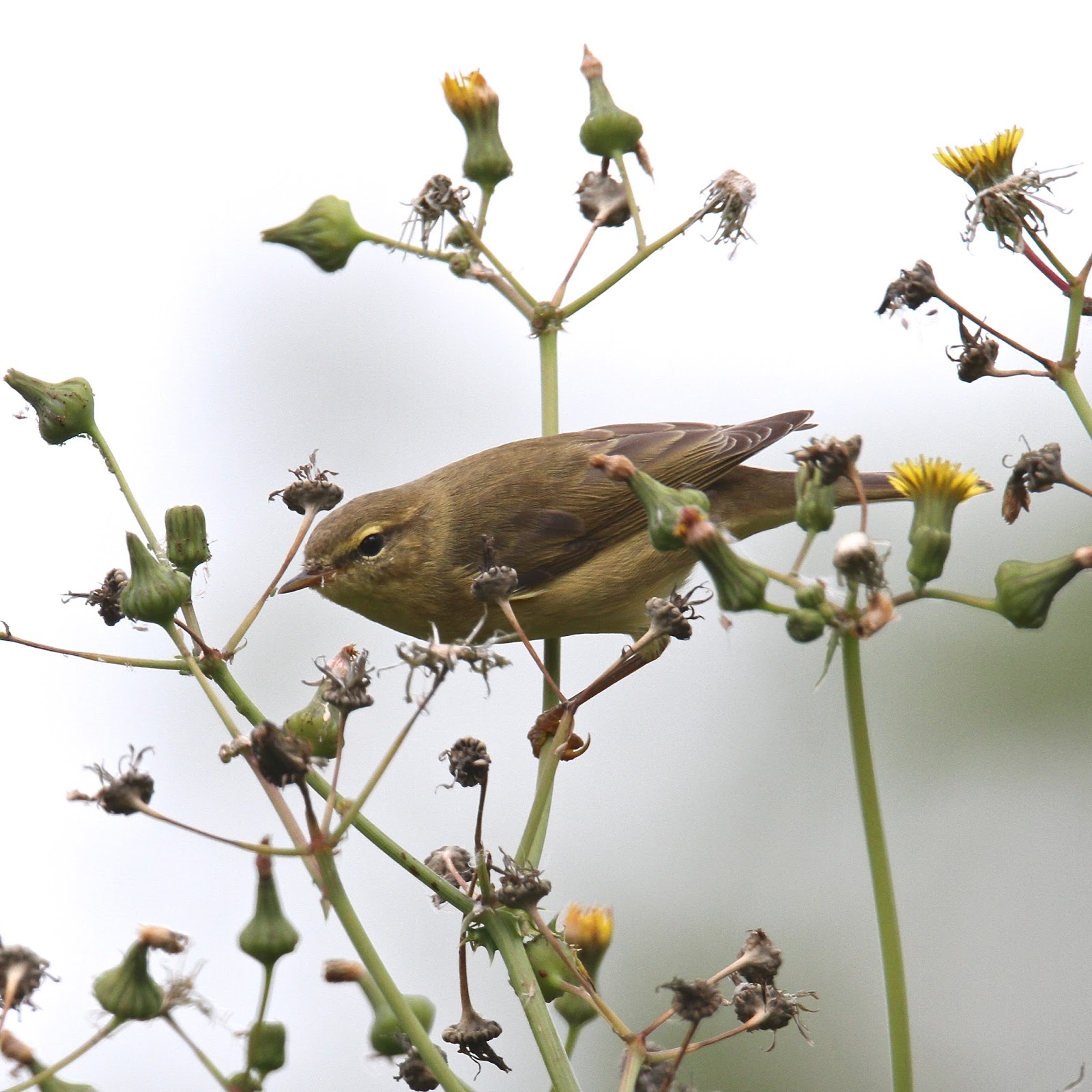
A few photos from my neighbour Gill's wildlife reserve (!) this week. This willow warbler was collecting aphids. Tricky photography against the light - mostly with +2 stops exposure compensation.
Willow warblers (Phylloscopus trochilus) are very obvious in April when they arrive and start singing. They will also be more visible in the next few weeks as they feed up before heading off to sub-Saharan Africa for the winter.
Willow warblers are less common than they used to be, especially in the south and east of the British Isles.
The willow warbler's name in Spanish is Mosquitero Musical. Thomas Bewick knew it as a willow wren.
You can watch a BTO video on identification of willow warbler and chiffchaff here.
Two views of a ruby-tailed wasp I found in the greenhouse. It is a parasite of solitary wasps and bees, laying its eggs in their nests. There are several similar Chrysis species, not easy to tell apart from a photo. The generic name comes from the Greek meaning "gold-embroidered dress". I think this one has 13 segments to the antennae and is therefore a male.
Leafcutter bees are midsummer bees. They are solitary bees and nest in holes in walls, wood, etc. This male Megachile willughbiella was hanging around in my bee house six weeks ago, waiting for the females to emerge. His hairy front legs remind me of a shire horse.
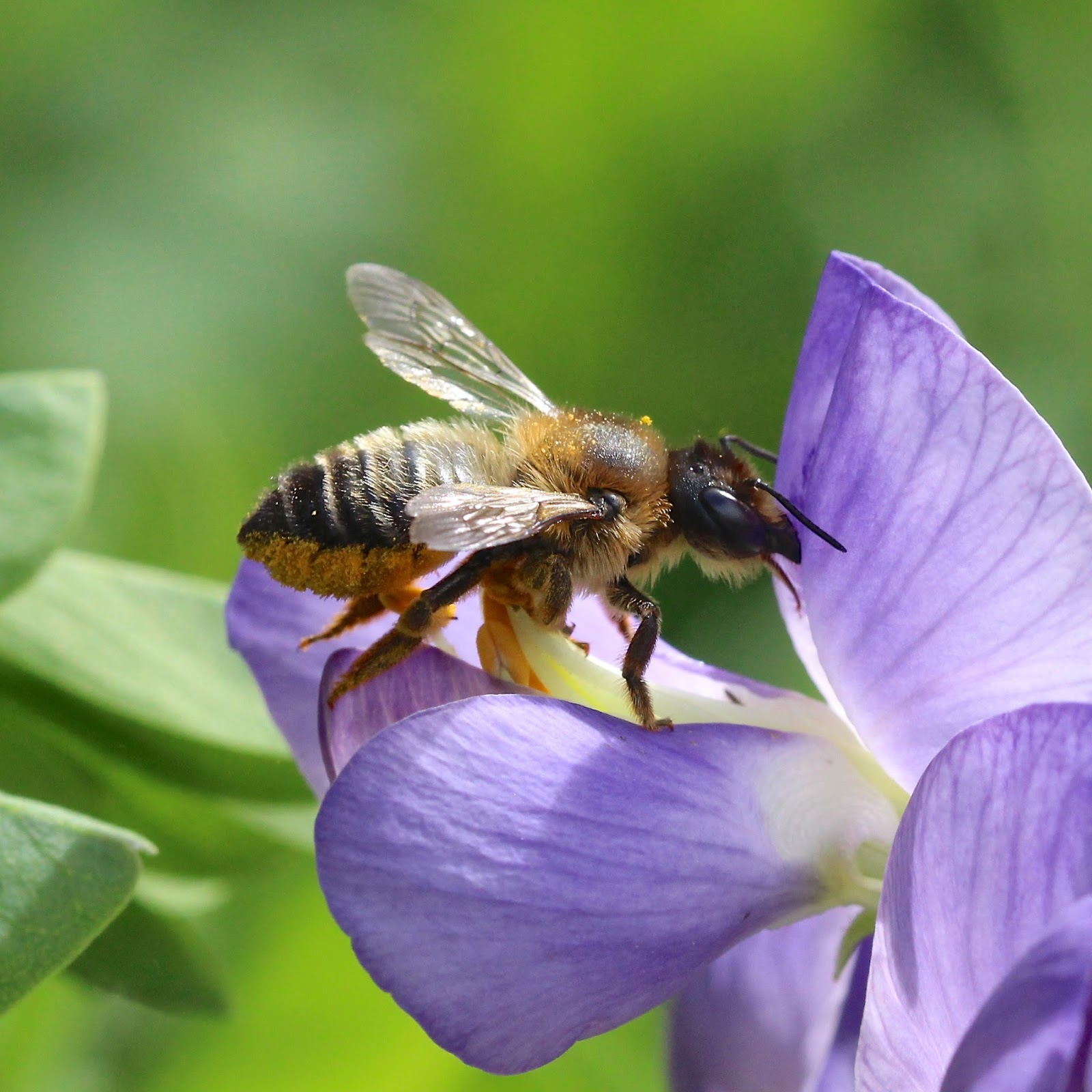
Despite looking carefully in Stephen Falk's book I find female leafcutter bees difficult to identify. This one might be Megachile versicolor as it has a two-tone scopa (pollen brush) under its abdomen.
This one could be Megachile centuncularis and has a good load of bright yellow pollen. The photo shows its powerful mandibles used for cutting leaves.
I am not at all sure about this one. It was difficult to photograph as it was head down in the flowers all the time.
This one is collecting blue-grey pollen from rosebay willowherb.
There have been female leafcutters in the garden but I haven't found where they chose to nest - it wasn't in my bee house. Two photos I am very keen to take are of a bee cutting a leaf and one returning to the nest with a leaf. I have found evidence of them cutting the raspberry leaves but never caught them at it.
To see Ed Phillips' astonishing photo of a leafcutter carrying a piece of leaf click here.
Here's a dragonfly I had never seen before - a black-tailed skimmer (Orthetrum cancellatum). It is common in the south of the country and these were at Croome Park in Worcestershire. The males have a beautiful dusty blue-grey colouring with black tails and dark green eyes. I read that they typically rest on exposed soil, as these were, which doesn't make for such a great photo.
The females have a yellow/brown/black ladder pattern on the abdomen and also have green eyes.
I also saw several mating pairs. Both sexes have yellow antenodal cross-veins near the front of their wings.
I don't do lists or ticks but it was a pleasure to find a new species.