My Blog List

Showing posts with label Wasp. Show all posts

Thursday, 18 July 2024

A ruby-tailed burglar

Parasites seem to be dominant over hosts in the bee house this year.  I watched a mason wasp putting the finishing touches to her nest, blocking up the entrance with mud.

I wasn't the only watcher.  There were several ruby-tailed wasps waiting around.  They are cuckoo wasps and lay their eggs in the nest of other solitary wasps.


One in particular taking a close interest in what was going on.

Eventually the mason wasp was satisfied and after a last look round she flew away.

Within a few minutes the ruby-tailed wasp had returned to the nest and started to chew out the mud seal.

It took 25 minutes of chewing.

You can see her ovipositor is extended ready for action.

Then she suddenly turned around to lay her own egg in the nest.

That took only a few moments and she was off, perhaps to seek another victim.

As I understand it, the mason wasp lays a series of eggs in different cells along the length of the nest, separated by mud wall in the same was a a mason bee so I presume the ruby-tailed wasp, with a short ovipositor, can only parasitise the front cell.  I hope I'll be watching to see what emerges next year.

PS.  The photos are attracting a lot of attention on Facebook.  The experts on the BWARS page say the mason wasp is Symmorphus bifasciatus and the ruby-tailed wasp is likely to be Chrysis angustula.

Sunday, 21 January 2024

A wasp nest in the roof


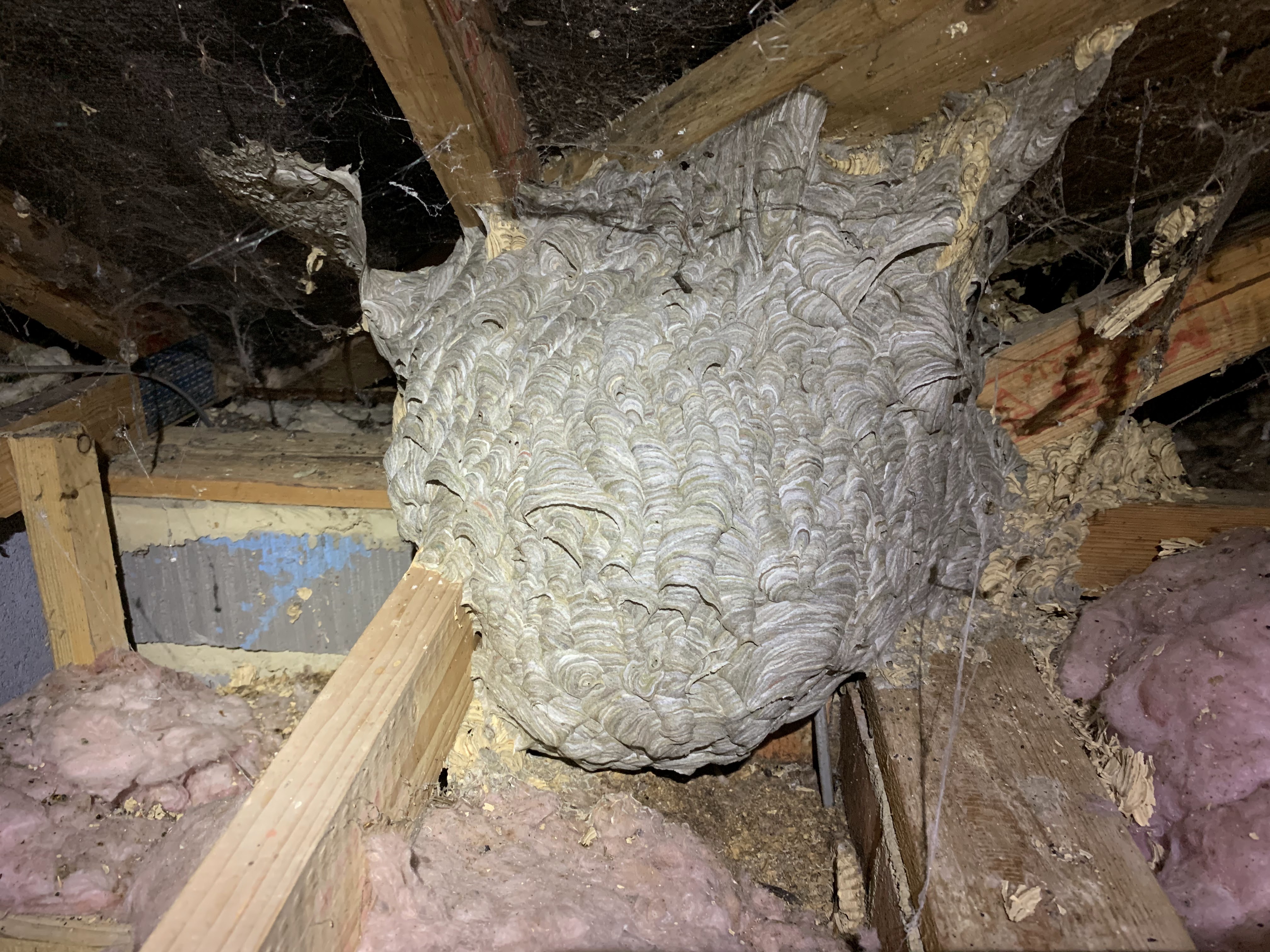
All summer and autumn there were wasps flying in under the eaves, often more than 100 per minute, so I knew the nest would be big.  Because a few wasps were still active in early December I waited until after a cold snap before going up to investigate.  My roof is low and cramped and the nest was built around the rafters so it wasn't going to come out in one piece. This is how it looked before I started.

This is the outer insulation layer.  You can see here how at one point the wasps must have changed to a different source of wood.  I think the grey comes from my shed!

This shows a bit of the comb before I removed the main body of the nest.

And this is what it looks like once it is out, all made of paper.  The combs are single-sided and horizontal with the cells opening downwards.  This was a big nest with eight storeys of comb.


The comb is surrounded by a thick layer of very fragile insulation.


There were a few dead wasps and from looking at them I think they are common wasps (Vespula vulgaris).   The nest would be a success if it produced only a couple of queens surviving the winter to found new colonies next season.  It seems an enormous enterprise to achieve that, compared with the Saxon wasps (Dolichovespula saxonica) that were in the roof of my bee house in the summer.

Friday, 11 August 2023

Wasps in the bee house

This year's new bee house has a space under the roof that I planned, in future years, to use as a release chamber.  In May I noticed a queen wasp had started to build a nest.  She flew in and out so quickly I wasn't able to get a photo of her or identify her.

Ten days later the nest looked like this.

After that I didn't take much notice, other than to dodge the wasps as they few in and out while I was photographing the bees and to think it was a small space for a wasp nest.  The nest grew to fill the space but then stopped.  A few days ago I saw a small male wasp walking about near the nest and was able to take some photos.


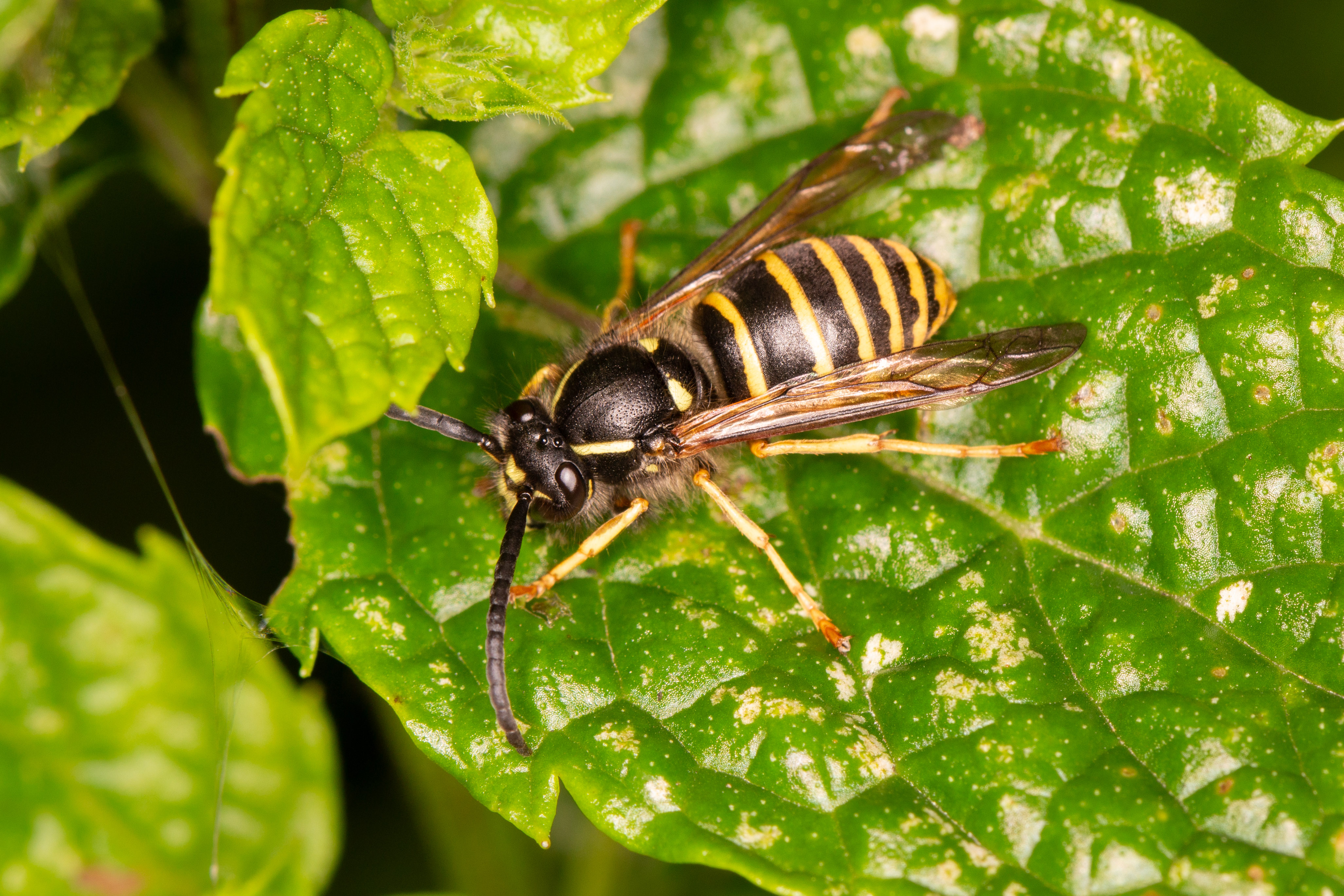
This is a male Saxon Wasp (Dolichovespula saxonica), an ID subsequently confirmed on Facebook.  The workers are usually on a mission but do occasionally stand about for a photo.
There has been a noticeable reduction in activity of the workers recently, suggesting that the colony is coming to the end of its life.


This worker is taking a drink from a raindrop at the entrance.

At the beginning of the week I saw my first queen.  She is bigger than the workers and much bigger than the male.  I watched her walking up and down the roof and I was concentrating so much on taking the photos that I didn't notice at first that she has no wings.  This poor wasp is doomed.

This photo shows the relative size of the queen and the male.

The next day this queen was sitting on a mint leaf directly below the nest, presumably having fallen out.


I haven't seen another queen but I expect there have been others flying out while I wasn't looking.  The males also liked to sit in the sun on the mint leaves.

They spent a lot of time cleaning their antennae.

Saxon Wasps are recent arrivals from Europe, having been first recorded in South East England 36 years ago.  Since then they have spread and are now fairly widespread.  They build their nests in aerial locations, under roofs and in trees or sheds.  The nests are small and are usually empty by mid August.  When these are gone I plan to take off the roof of the bee house to see if I can remove the nest intact.

The severe wing deformity in the queen wasp is presumably due to deformed wing virus (DWV), which affects honey bees and gets noticed by beekeepers in beehives.  It also affects bumblebees and solitary bees (and obviously wasps) but usually doesn't get noticed because they can't fly.  DWV wasn't a problem in honey bees until the arrival of the ectoparasite Varroa destructor which is now almost universal.  DWV levels in honey bees are now many times higher and can lead to colony death.  There is concern that this will also lead to spill over into other hymenopteran species.  Social wasps could acquire the virus from contact with or predation on honey bees.

There is a much larger nest (presumably of a different social wasp) in the roof of my house, with over 100 wasps per minute going in and out.  I am keeping out of the way of that one but with luck I'll be able to remove it as well, although I'll wait until the winter when they have all gone.

Friday, 23 June 2023

A sinister visitor


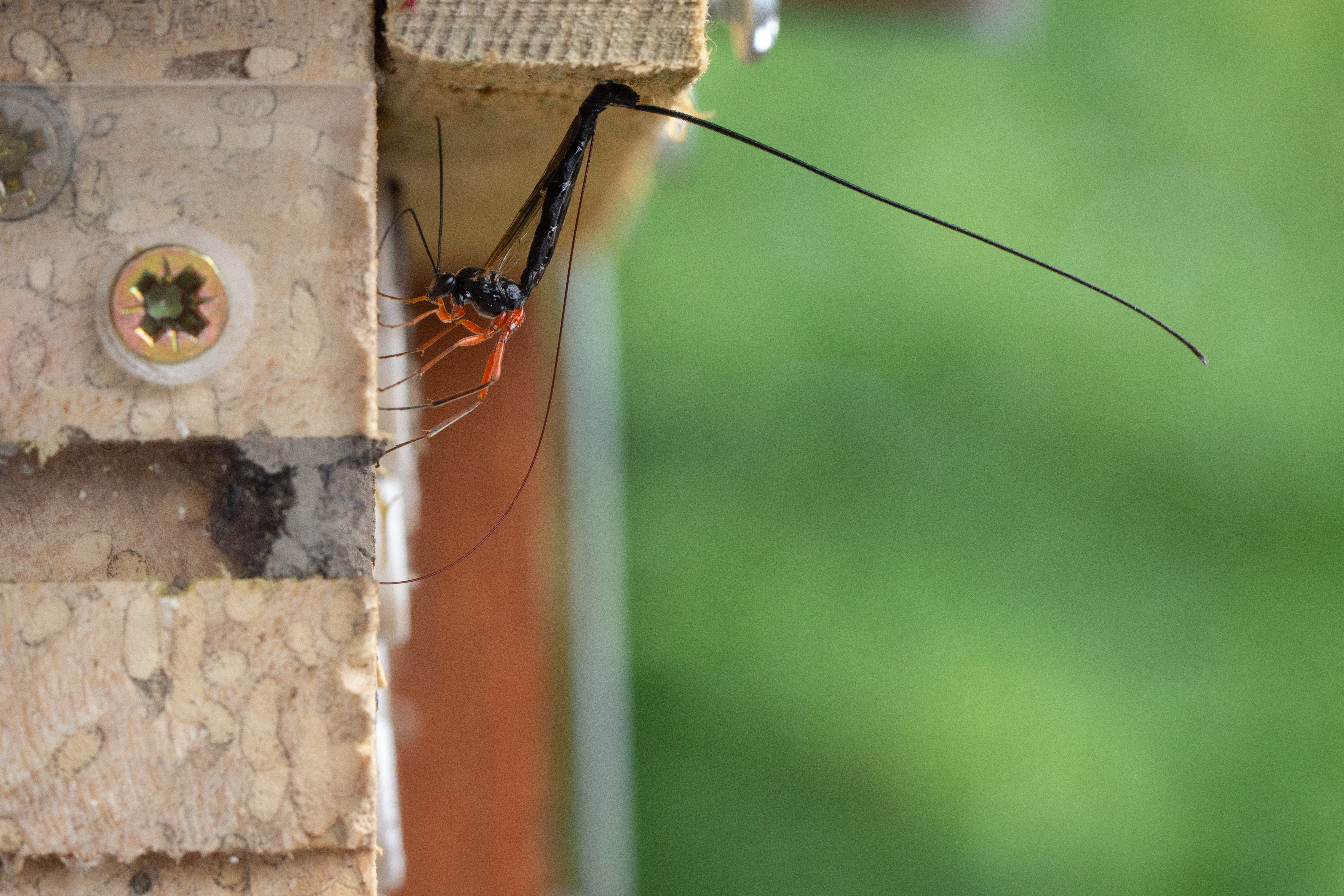
My new bee house is covered in a wire mesh as protection against birds but it is no match for this predator.  This is a female ichneumonid wasp, a parasitoid of solitary bees, possibly Ephialtes manifestator, although ichneumonids aren't easy to identify.  I first saw this one with her very long ovipositor already through the mud seal on one of the completed red mason bee nests.  She was constantly twisting her body to manipulate the tip of the ovipositor by feel to penetrate one of the cells inside.  Once in she lays an egg which will hatch and the larva will devour the bee larva and all the stored pollen and nectar in the cell.  It will then metamorphose into a wasp and wait until next spring to emerge, along with the surviving bees.


At one stage the ovipositor was in up to the hilt (40mm or so) so it may have penetrated more than one cell inside.  The ichneumonid was already in position when I noticed it and it was over 75 minutes before it withdrew, showing extraordinary patience.


Then it was sniffing around the other cells, looking for another opportunity, bending its antennae like this as it probed the mud seal.

At one stage it was considering this blue mason bee nest but couldn't see what I could see, that the completed nest is only half full and the cells would have been out of reach.

The next day it was back, this time attacking a red mason bee nest in the observation section.

After selecting the target it withdrew the ovipositor from its sheath and very carefully probed the mud seal.


And after only two minutes it was through.

Then it spent another 59 minutes trying to get past the second wall but failed, and eventually gave up.


I had thought the empty chamber, which is often at the front of the nest, to be a defence against birds but it will be equally effective against this kind of attack.

There are lots of other parasites around the bee house.  Some, such as this Sapyga quinquepunctata, a parasitic wasp, sneak into an unfinished nest to lay an egg while the owner is away.


Ichneumonids wait until the nest is complete and the host larva is growing before they attack. Another one I see quite often is Gasteruption jaculator which is smaller than Ephialtes manifestator and has a shorter ovipositor, probably targeting small solitary wasps and bees.