My Blog List

Showing posts with label Great tit. Show all posts

Sunday, 19 June 2022

Garden birds

It has been an interesting week for birds on the feeders.  The most exciting sighting was a willow tit.  These photos were taken with the first camera to hand through the window.


I eventually got set up with a better lens with the window open but I have had only a few glimpses since.  This isn't a great photo but it does show the pale wing patch, said previously to be typical of willow tit (but watch the video in the link below).

My BTO Garden BirdWatch records show I have recorded a marsh tit three times in the past 25 years but never a willow tit.  Marsh and willow tits are hard to tell apart and my previous identifications could be wrong but I am grateful to Denise A, Phil A and Phil J for confirming the ID this time.  You can watch a short BTO video on telling marsh tit and willow tit apart here.

There are lots of woodpeckers as well and they tend to monopolise the peanut feeders.  Adults were still feeding fledglings this morning, three weeks after they first appeared.


Another rare summer sighting this week was a male siskin.  I see a few each winter but never before in the summer.  They did breed in the nature reserve only 1km away last year.

And another rare summer bird, a male reed bunting, a regular over the past three weeks.  I expect to see one or two in late spring but never before in the summer.

And previously reed buntings have always been ground feeders here but this one is happy on the seed feeder.

A pair of jays are here every day.  I hope they have a nest nearby and I may see young jays soon.  Jays nested in the garden last year but the nest was wiped out by carrion crows.

Activity on the feeders is frantic at the moment as there are so many young birds.  When it is here the willow tit isn't immediately obvious because there are so many young great tits.

There are almost 30 bird species in the garden each week, mostly regulars but every now and then a surprise.

Saturday, 20 November 2021

While the cat's away, the mice will play

Or in this case, while the sparrowhawk is away all the small birds will make the most of it.  The trail camera is set up to watch the new sparrowhawk perch in the kitchen garden but it records a lot of other birds while he is away.  Even when the coast is clear they are still very much on edge.  Here is a taste.


There is a surprising amount of activity after dark, including this rather indecisive wood mouse.

Sunday, 31 October 2021

Pop goes the weasel


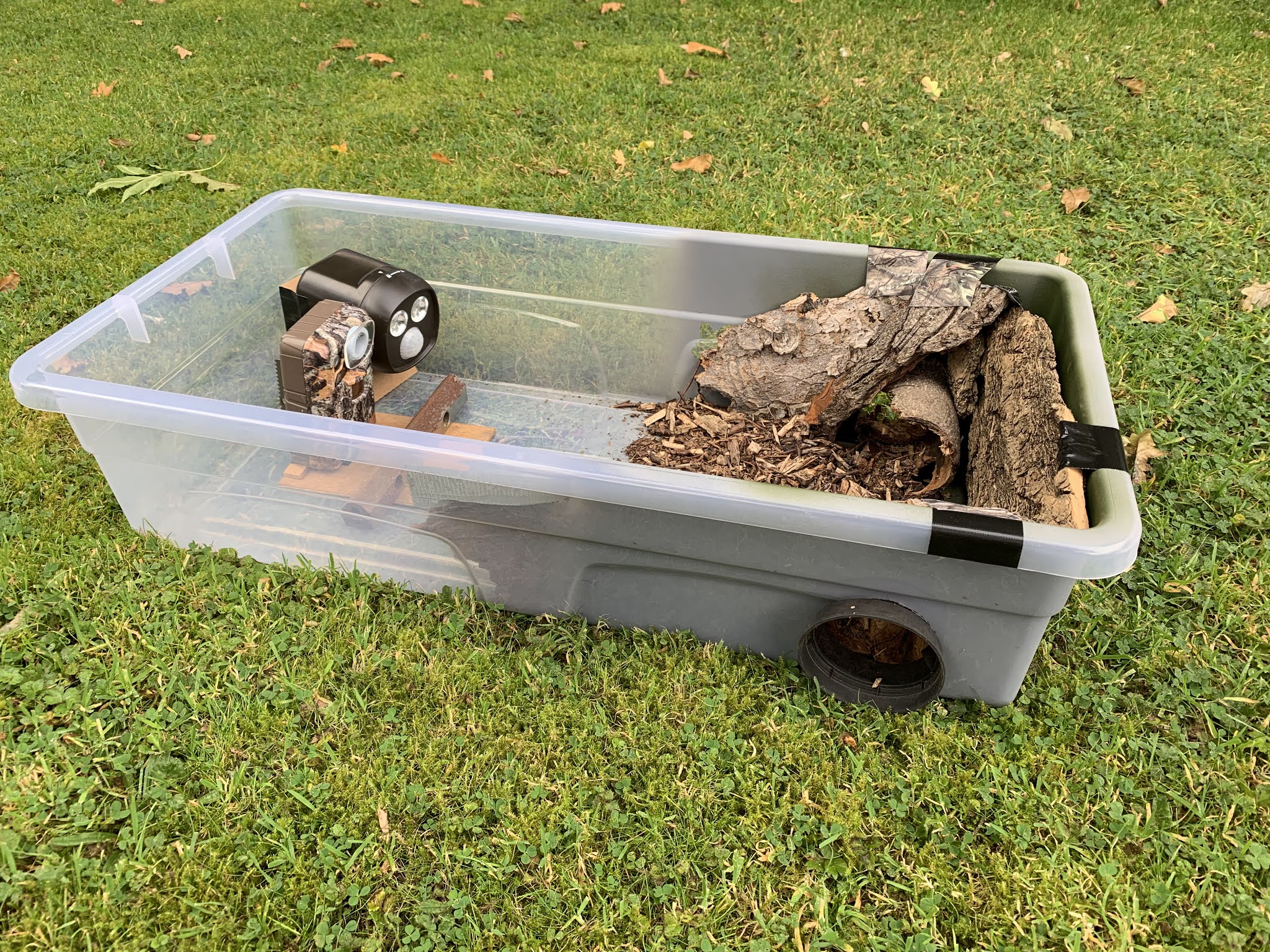
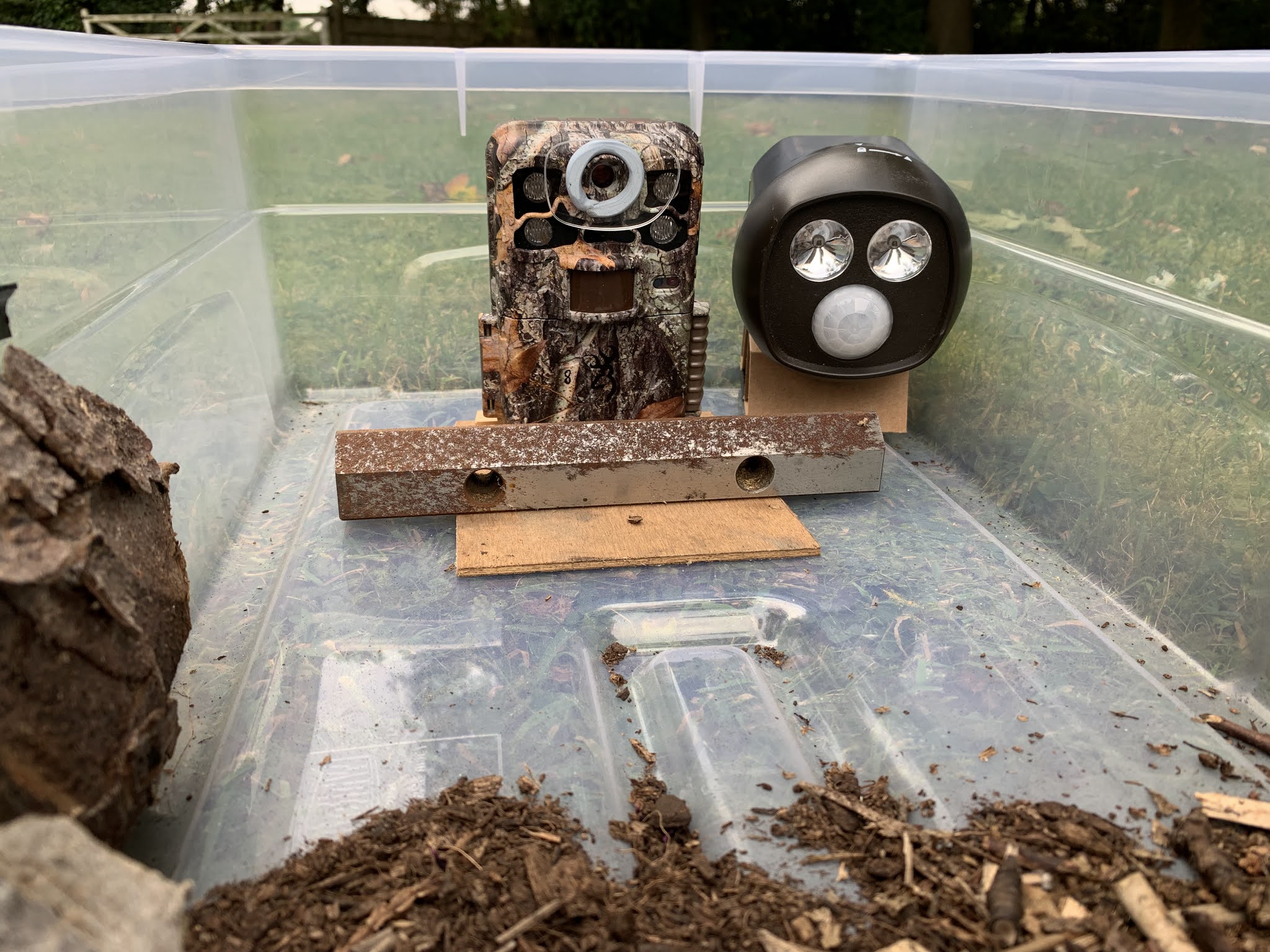
Ever since the weasel turned up in the garden in the summer I have been trying to get another picture.  Inspired by the Mostela*, a trail camera box used for monitoring stoat and weasel populations, I built one similar from a translucent plastic storage box (£7 from Dunelm).  There are two holes at one end and a trail camera at the other.  The Mostela was designed by Jeroen Mos, an ecologist and small mustelid researcher in The Netherlands, and is an enclosed box with a cutaway plastic pipe connecting the two entrance holes.  Wanting better pictures in a more natural setting, I made mine to admit natural light and built a small "stage set" of bark and loose bark chippings at one end.  The trail camera has a +2 dioptre lens to cope with the close focus.  It can record in colour in daylight but reverts to infrared when the light is poor or at night and it is then augmented by a motion-activated battery-powered infrared security light (a Brlnno APL200).  This is a view of the box with the lid removed.


Here are the camera and the infrared light.

This is the "stage set".

Here is the box in the garden with two Victorian land drain pipes as access tunnels.

Like other small mustelids, weasels are very inquisitive animals and will investigate any small hole which might contain prey.  For the first few days I baited the camera box with sunflower seeds so that it would smell of voles and mice but recently it has been left as it is (although mice and voles still visit every day).  I had the camera box set in my garden and the local nature reserve for four weeks before a weasel eventually made a brief appearance this week.  In fact it was very brief so I have added a 25% slow motion replay to the video.


Several other animals are much more regular visitors.  They include wood mice, always at night and so in black and white.  Wood mice visit every night and spend a lot of time in the box.  There is no food for them but perhaps it is warm and dry and feels safe.


Bank voles more often appear in daylight.  It is a pity the weasel didn't stay this long.


Common shrews also mostly turn up in daylight.  This clip also has a 25% speed replay.


Pygmy shrews appear both in daytime and after dark.


And a couple of very unexpected visitors.  Both birds were in the box for over two minutes and got rather agitated when they couldn't find the way out.


I plan to leave my weasel box set in the hope of more recordings and, perhaps, one day even a visit from a stoat.

* Mos J, Hofmeester TG.  The Mostela: an adjusted camera trapping device as a promising non-invasive tool to study and monitor small mustelids.  Mamm Res. 65, 843-853 (2020). https://doi.org/10.1007/s13364-020-00513-y

Friday, 28 December 2018

Wednesday, 5 September 2018

Worth two in the bush


This poor great tit flew into the window and looked a bit cross-eyed when I found it.  It sat on my hand for several minutes before flying off, apparently none the worse for it.


Saturday, 7 January 2017

My left hand

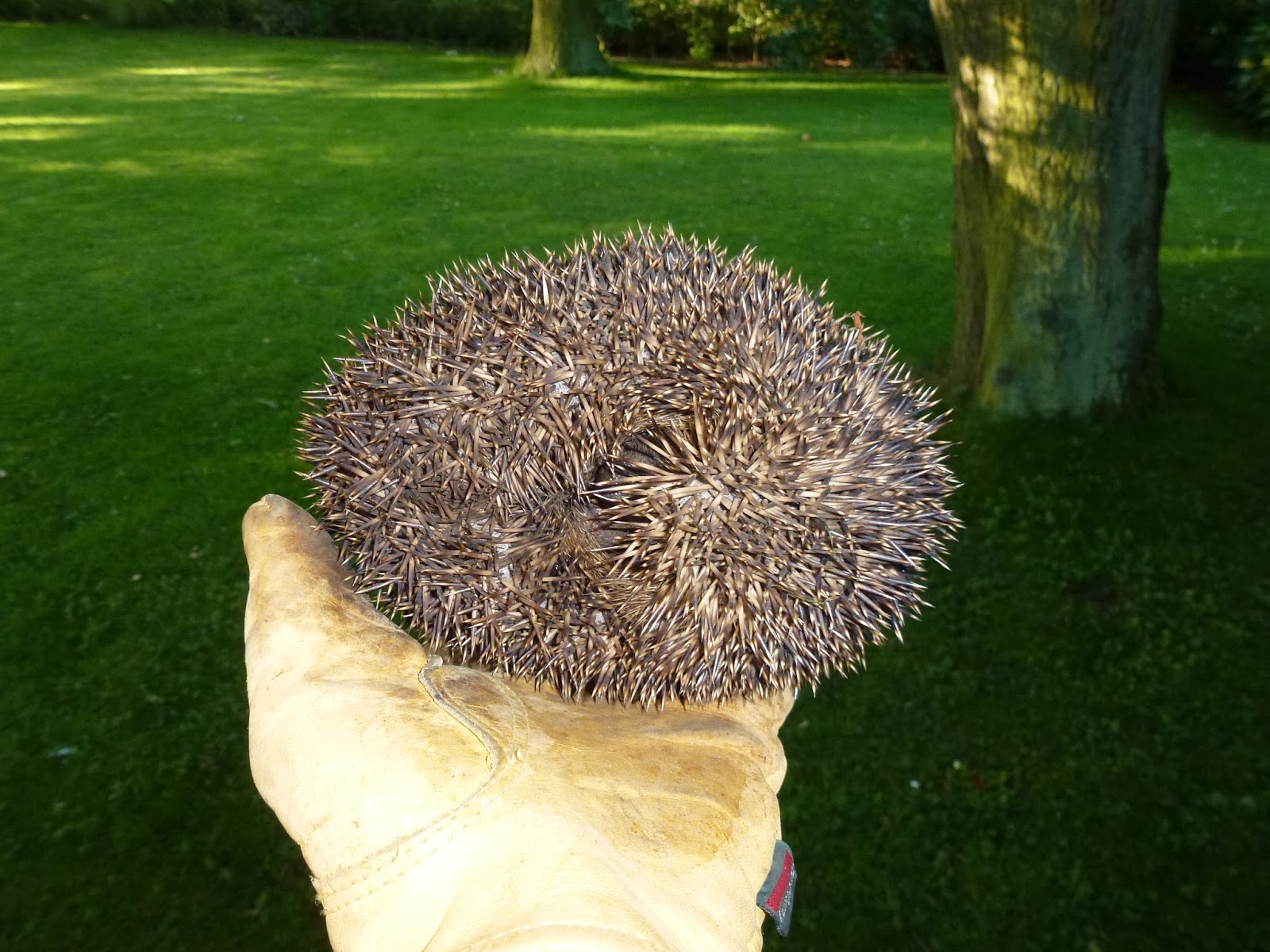
I am right-handed so if I am holding something to be photographed it is in my left hand.  As well as feeding the robin and the pheasant I seem often to be catching birds that have strayed into the house or greenhouse or, occasionally, been stunned by flying into the window and everything has to have its photo taken before release.  Over the last few years I have collected quite a few photos of my left hand and here are some of them.  I wonder what I'll catch this year? Whatever it is, it will have its photo taken.


I expect you'll recognise everything.  The only tricky one is after the pheasant and before the blackbird and is a juvenile whitethroat that got stuck in the greenhouse.