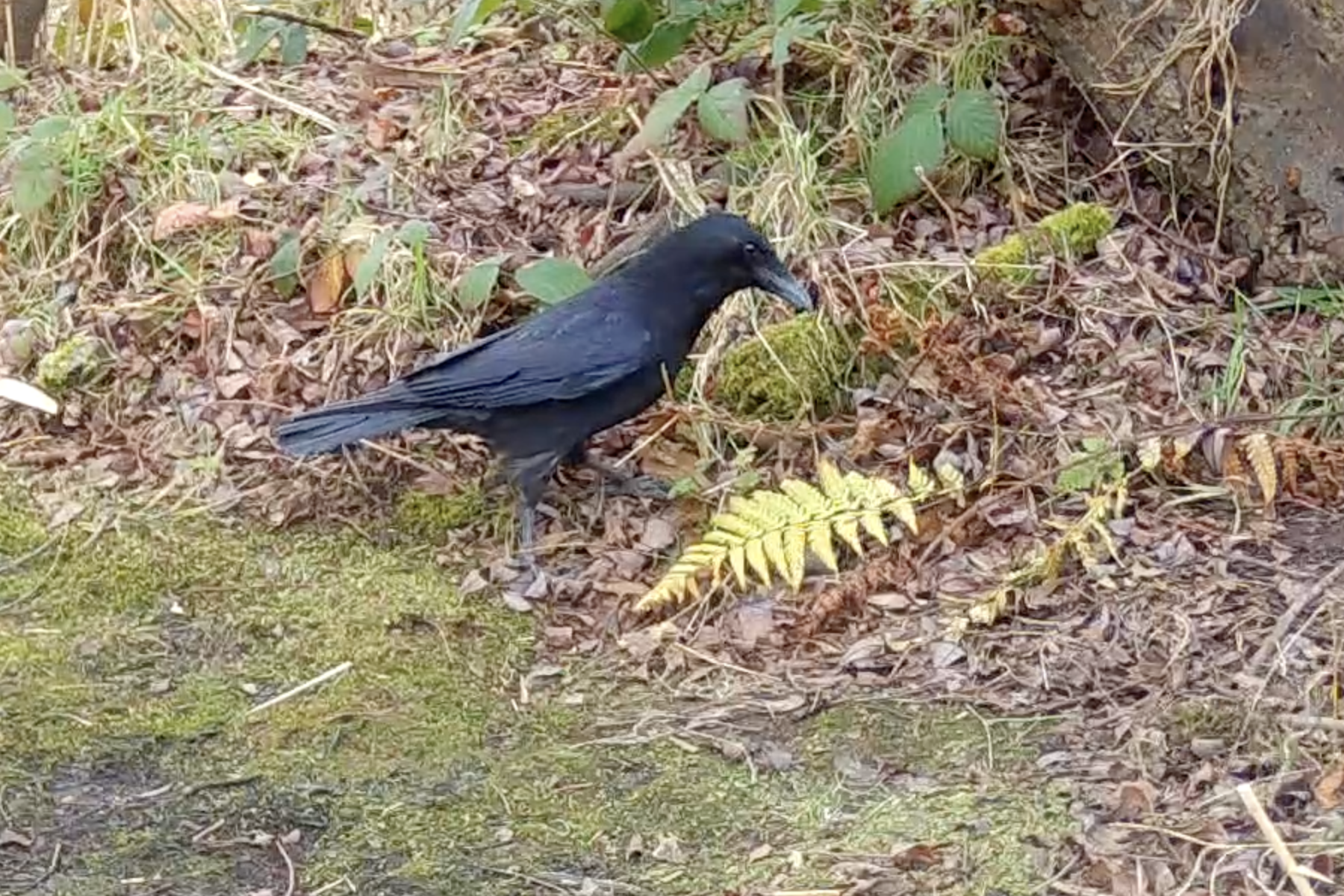
Crows are pretty smart but this one wasn't quite as clever as it thought. A carrion crow appeared on OtterCam with a piece of dried bread. It dunked it in the water to soften it (clever) and ate half.
It decided to hide the rest for later (also clever) and then flew away.
However, later that night a wood mouse found and ate the bread - although the camera didn't trigger as the mouse stole the bread the evidence is pretty damning.
The following afternoon the crow returned for the bread but couldn't find it.
I see some interesting things as non-target captures on trail camera but this is one of the best. The video is a bit longer than usual but is worth a watch.
Crows have deserved reputation for intelligence but don't always get the upper hand. Aesop's fable The Crow and the Pitcher shows how smart they can be but in The Fox and the Crow it was the fox who came out on top. As far as I know Aesop didn't write about The Crow and the Wood Mouse.
A couple of my trail cameras have been on tour - to my friends Gill and Martyn in deepest darkest Hexhamshire. I took a new camera box for one camera and set up the second with a sardine lure as a new experiment. Sardines are used by researchers to increase detection of carnivores so I wondered if it would work here. Hexhamshire is home to polecats (Mustela putorius), one if the UK's most elusive mammals, so one aim was to see if we could catch one on camera. The more realistic aim was to see what we would find.
The cameras were set for three weeks and at the end of that time both SD cards were full. The sardine camera had 398 videos and the box camera 498 so I had plenty to look through. The sardine camera was set up at the edge of woodland with the camera and the sardine can fixed to opposite ends of a piece of wood. The can was secured with a cable tie.
SardineCam recorded 11 species but only four of those were interested in the sardine lure - the others were just passing by. The four were badger, wood mouse, magpie and domestic cat. The badger visited only once but tried hard to get into the can. The camera gave a great close up of its teeth and claws (with a spider in the top left of the lens).
The magpie visited twice and the first time it managed to peck a few fragments of fish, even though the can was only slightly open (the can is now very visible after badger removed all my camouflage).
The wood mouse visited many times, obviously attracted by the smell but not trying to get at the can. The cat just sniffed a few times and walked on.
Most of the 398 videos were of American grey squirrels. Other passers by were blackbird, robin, wood pigeon, pheasant, roe deer, and red fox.
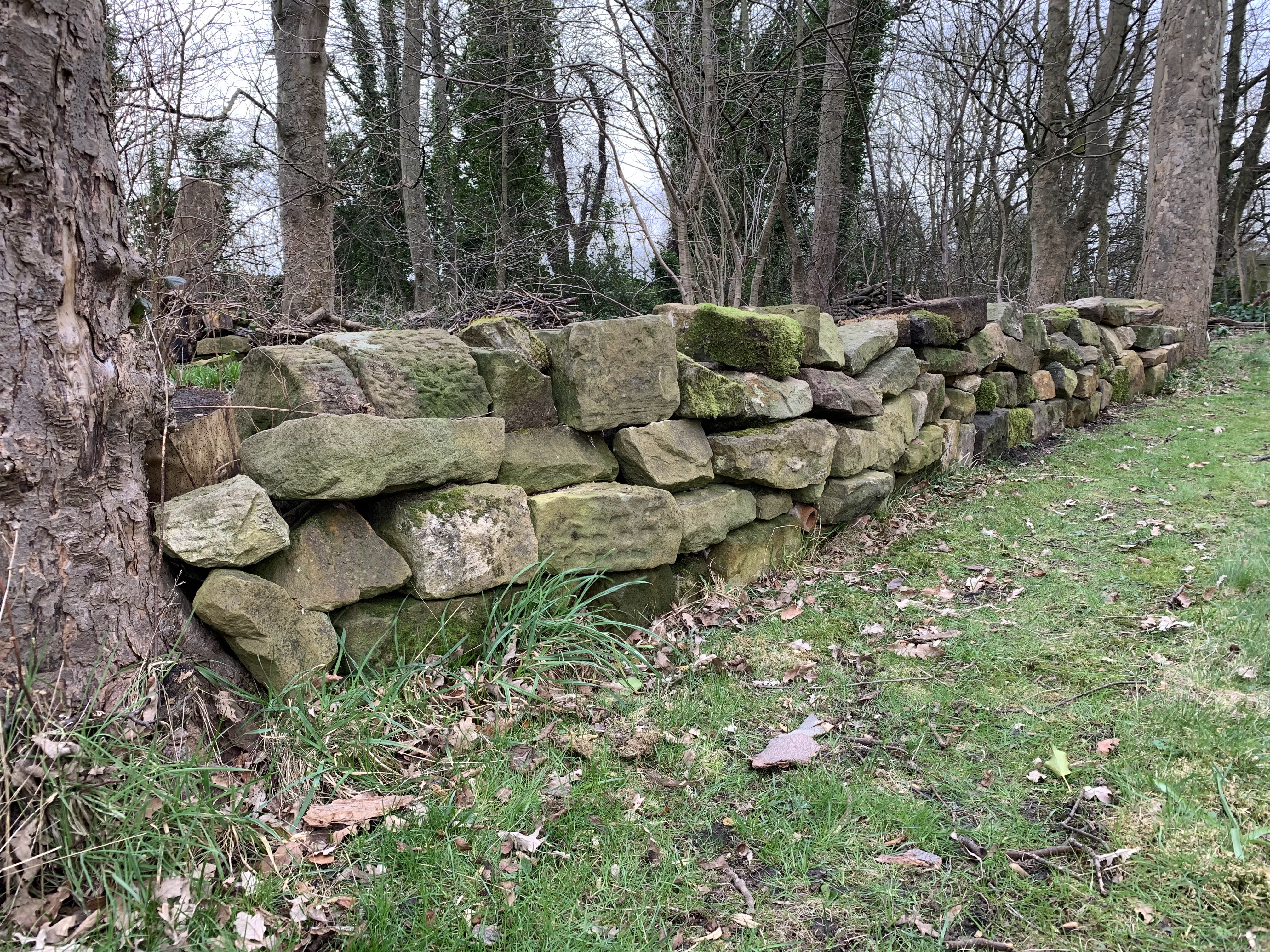
My new camera box was set up at the base of a stone wall.
It had large entrance pipes hoping to entice in slightly larger animals but in the end the only visitors were wood mice, bank voles, common shrews and pygmy shrews. Here is a brief summary of 498 videos (most of which featured a wood mouse!).
It was very interesting to try out the cameras in a new environment. The card in the camera box was full in only nine days so another time I would need a bigger card. I was hoping we might see a stoat or a weasel and I still have polecat on my wish list.
The recent changes in the camera box ("weasel box" as was) are intriguing. The water shrew first turned up on 30th August and it has been here almost every day since. The last weasel sighting was 10th September and since the weasels stopped coming the common shrews and wood mice have returned. Until now I have never seen more than one species at a time but this happened twice on one night, a few hours apart. It is pitch dark of course, and the shrew doesn't have such good eyesight. The second time they must have passed each other in the entrance pipe before the mouse turned round and came back in.
Most days I feed the shrew with casters (blowfly pupae) and she usually takes them away one at a time. Occasionally she eats in, rather than having a takeaway. On this night she ate them all in the box, taking each one to the entrance and eating 28 casters in less than 20 minutes (I haven't shown them all), squeaking excitedly all the time. She certainly looks well fed.
There was a bank vole in the mouse trap in the attic so I put it in under the slate and the shrew took it, like she took the mouse the first time. She puts a lot of effort into retrieving her prize.
Shrews don't live through a second winter so this one doesn't have long to go. I am still hoping she might appear on camera with some of her offspring.
My previous attempts at filming a weasel collecting food were thwarted by its high speed smash-and-grab technique - all we could see was a blur as it departed. This time I had two mice and I thought if I put them both out the weasel might be spoilt for choice. And it worked.
The mice were fresh and only four hours after I put them in the camera box a male weasel turned up. As you will see in the video, he was very undecided but eventually took one mouse away. He was back very early next morning and brought the rather chewed mouse with him. He obviously knew the second mouse was there but left again with the first one.
Four hours later he was back and took the second mouse, seeming to play fight with it before he left. Another two hours later he returned, apparently without the mouse, but I think it was just outside because after another minute he threw it back in, just as an ambulance went by. After checking to see whether it was an ambulance or a police car he returned for his prize and left.
I knew weasels were in the habit of carrying their food around but it is fascinating to see it. Because of their small size, body shape and hyperactive lifestyle weasels need to eat one third of their body weight in a day, roughly one mouse a day. If they are able to catch more than this they will cache food for later, presumably not bothered if it is a bit ripe.
I have been experimenting again. One of the limitations of the Mostela design of the trail camera box for weasels is that the two entrance holes are opposite each other and the weasel often dashes straight across in a blur. It occurred to me that offsetting the entrances in some way might make visitors pause or look around so I built a new box. This one is made from a very long under-bed storage box, the extra length giving more flexibility with the camera position. The camera now looks straight down one entrance and the other is to the side, as before, with a small rock in between. This is how it looks.
And this is a phone view of what the camera might see.
I have camouflaged the box a bit more than before so that it might look a bit more "natural" from a weasel or stoat's point of view.
It was no surprise that the first visitor to the new box was a wood mouse. With the new view we are able to see it coming and going. The third mouse seems to have the right idea.
Next up was a bank vole, good to see as there have been very few on the cameras in recent weeks. The population is at its lowest at this time of year as quite a lot have been eaten by weasels, stoats, foxes, kestrels, owls, etc.
And best of all, within three days, a weasel, obviously intrigued by the new box.
This was one visit, all recorded within 40 seconds. It is fun to see what is happening outside.
There is work to do on the camera position and angle, and perhaps a bit on the interior design, but I think it has promise.
Planning ahead for the coming summer, I have also greatly extended the weasel wall which is between the copse and the meadow. Is is now higher than before and is 10m long. The original had a nest box built into it and I have put in another one in the new extension.
This is made from a small Ikea storage box, a bit larger than a shoe box, with a weasel-sized entrance hole. I have no way of knowing whether the weasels were using the original and the same will apply to this one which is now buried within the wall. Robert Fuller, the source of inspiration for this, had lighting and live-streamed TV cameras in his but that is a bit beyond me. However, I will put up a couple of trail cameras in the summer to watch the wall like last year. This is how the new wall looks, built with lots of gaps and nooks and crannies.
And lastly a bonus video. This camera was set up elsewhere to look for otters and recorded a frustrating near miss which was lucky all the same. A weasel was hunting right at the edge of the frame and made a kill just out of view. The main image is cropped and there is a more heavily cropped slow-motion replay ay the end. You can just see the weasel roll briefly into view with the wood mouse it has just killed.
Last week the otter cubs and their mother reappeared on the cameras for two nights in a row. They are a month older than their first appearance and already look bigger and more agile.
The cameras also caught an episode of the cubs play-fighting and tumbling into the water. It is a bit disjointed because of the camera positions but fun to watch.
I also managed to retrieve a camera from the culvert after the recent floods. It wasn't well positioned so the view isn't as good as usual but we do get a few glimpses of the cubs. It is a bit fragmented but in the first clip the cub is scared of the culvert and retreats and the mother has to go back to collect it. In the daytime clip later on the cubs really struggle against the current and slippery gate, even though the water level was low.
Having seen where the cubs were playing on the first video I went back to reposition the cameras but they haven't been back since. One of the new camera angles is looking directly at a wood mouse nest hole with the disadvantage that it records dozens of mouse videos every night. However, the camera wasn't the only one watching.
The video shows the views from two cameras separately.
I can't tell from the video whether the owl caught the mouse but I suspect not as a mouse later reappeared and the owl was back two nights later. The second time only the top camera caught it in action but we can see a mouse in its talons as it flew off.
This is National Mammal Week so it is a good time to show a few mammal pictures. When I wrote about the small mammal camera box a few weeks ago it was about 5m inside the small copse in my garden. The camera was seeing bank voles, wood mice and shrews every day/night. After that I moved it about 10m, so it was now 5m into the meadow. The clientele changed immediately and the wood mice stopped coming. The bank voles and shrews still turned up regularly but the new arrival was a field vole. The noise on the video is rain on the roof of the box.
The next video shows the difference between a bank vole and a field vole. The latter is larger, greyer, has a shorter tail and has flatter, furrier ears.
Bank voles usually visit the box one at a time. If there is more than one it can lead to a bit of conflict.
The other regular visitor was a common shrew. It is hyperactive compared with the voles - the video is at normal speed.
I then moved the box back to the edge of the meadow and the copse and the wood mice immediately reappeared. Being mainly nocturnal they show up in infrared recordings.
I was surprised that the mice don't want to venture even 5m into the meadow, and that the field voles won't go 5m into the wood. The bank voles and shrews are happy wherever the box is.
The main reason for having the small mammal camera box is to try to film a weasel but so far no joy. I have seen the weasel this week near the gate so I have moved the box over there and fitted larger entrance pipes in the hope that might entice it in. We'll see.
This blog has been taken over by insects in the last few weeks so it is high time we had some trail camera images. My small mammal trail camera box, modelled on a Mostela, has been set in the garden for over a month, hoping to catch a glimpse of a weasel or a stoat. So far there has been no sign but smaller animals are daily visitors. I put in a few sunflower hearts from time to time so the box will smell of mice and voles which may, in turn, tempt a curious weasel.
The most frequent visitors, especially in daytime, are bank voles. They vary in size as some are not full grown. The video shows a full size vole stuffing its cheeks with seeds before taking them off to eat in peace or to hide for later.
Wood mice are mainly nocturnal and so far have only shown up at night, so in black and white on the video via infrared. They usually turn up long after the voles have taken all the food.
Common shrews are insectivores but they are surprisingly keen on sunflower hearts, something I have seen before.
Smallest of all are pygmy shrews. Weighing only 5g or so they are slimmer than common shrews with a proportionately longer tail and with two-tone colouring rather than the three-tone of common shrews.
The last video puts them all together to compare their sizes.
The water shrew's whole world is a bit of muddy bank under the culvert and a few metres in either direction. It is amazing to see how much it can find to eat very close by. The shrew seems to favour one spot under the culvert to eat (back left as we look at it). Sometimes it stays to eat (often with its back to the camera) but sometimes it seems to drop the food and leave to find more almost immediately. I came to the conclusion that it must be caching food there if it has a short-term surplus, and it doesn't seem to have any difficulty finding food. Then I found a paper from Austria* which describes food caches in the Eurasian water shrew, mainly consisting of caddis fly larvae and water snails. I presume the venomous bite of the water shrew will disable the prey to stop it escaping. Here is the shrew eating, first a shrimp it has just brought in, and then what looks like a larva, perhaps caddis fly, from the larder.
This water shrew first came to notice when the camera was set to record otters. Now several other things have turned up while the camera is after the water shrew. The most intriguing has been a wood mouse. Several times the camera has seen a wood mouse come to the cache and take food, either eating it on the spot or taking it away. As far as I can see it is always a caddis fly larva still in its case. The next video shows the shrew depositing food without eating it, then once coming from the nest/burrow for a snack, and then the mouse - twice it comes to take a caddis fly away and the third time it stays to eat it. I have added a short slow-motion replay to show the mouse biting the end off the casing and pulling out the larva, just like the shrew does.
The camera is still in place in the hope that it will record even more interesting behaviour.
* Haberl W. Food storage, prey remains and notes on occasional vertebrates in the diet of the Eurasian water shrew, Neomys fodiens. Folia Zool. 51(2):93-102 (2002).
Or in this case, while the sparrowhawk is away all the small birds will make the most of it. The trail camera is set up to watch the new sparrowhawk perch in the kitchen garden but it records a lot of other birds while he is away. Even when the coast is clear they are still very much on edge. Here is a taste.
There is a surprising amount of activity after dark, including this rather indecisive wood mouse.