My Blog List

Showing posts with label Nether Heyford. Show all posts

Tuesday, 7 October 2025

September Ladybirds

Apart from the excitement of the Scarce 7-spot Ladybird and the Hieroglyphic Ladybird there were several other good finds last month.  The smallest ladybird I have seen, and the equal smallest anywhere at 1.1-1.5mm, was the appropriately named Dot Ladybird, another new species from my mother's garden in Northamptonshire.
 

Not quite as small but also black and hairy was a Forestier's Ladybird.

Closer to home I found another small black hairy one, a Scymnus nigrinus,

and another very small ladybird, a Scymnus suturalis,


Also several Adonis Ladybirds,

a 2-spot Ladybird form typica,

and the less common and more striking 2-spot f. sexpustulata.

Rather more camouflaged were a Larch Ladybird,

an 18-spot Ladybird,

and a Striped Ladybird.

Others were an Eyed Ladybird,

a Pine Ladybird,

and a Cream-spot Ladybird.

And finally more Hieroglyphic Ladybirds.  This one was in Elemore Park in Co Durham,

and a rare black form in Havannah, just down the road.

By next month all the ladybirds will be hibernating and attention will shift to overwintering sites such as gravestones.

Wednesday, 15 May 2024

An Aussie ladybird


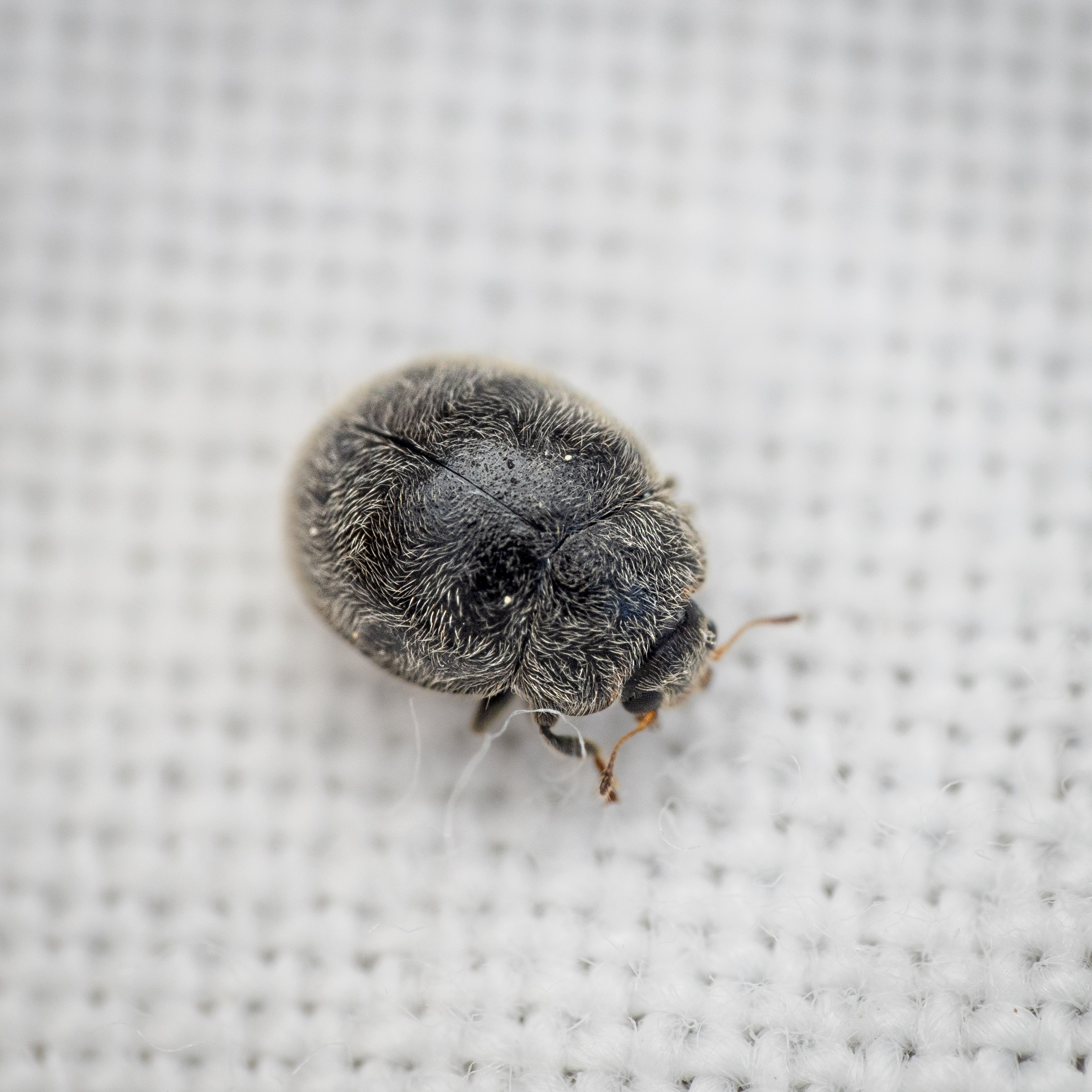
A new ladybird for me, this is a native of Australia but was found in ivy in my mother's garden in Northamptonshire.  Rhyzobius forestieri eats scale insects and because of this has been introduced to various parts of the world as a biological control agent, notably to California in the 1890s and to Mediterranean countries in the 1980s to control scale insects on olive trees.  It was first reported in England in the garden of the Natural History Museum, presumably because there was someone there who could recognise it, and has since spread out across the South East and Midlands and has been added to the list of established British ladybirds.
Rhyzobius forestieri is small and black and covered in wavy white hairs.  The abdomen underneath is orange and this one obligingly rolled over for a photo of its tummy.


Sunday, 27 August 2023

Garden ladybirds

Not my garden, but my mother's, in Northamptonshire.  I had a look at the apple trees and found seven ladybird species and dozens of individuals.  They were:

2-spot Ladybird

7-spot Ladybird

10-spot Ladybird f. decempunctata


10-spot Ladybird f. bimaculata, one I haven't seen before

10-spot Ladybird f. decempustulata

14-spot Ladybird

Harlequin Ladybird

Cream-spot Ladybird

And the biggest surprise, Pine Ladybird

I don't think we have ever noticed anything other than 7-spot Ladybird before.  It goes to show, if you don't look you won't see.

Friday, 29 April 2022

Back to the wall of bees


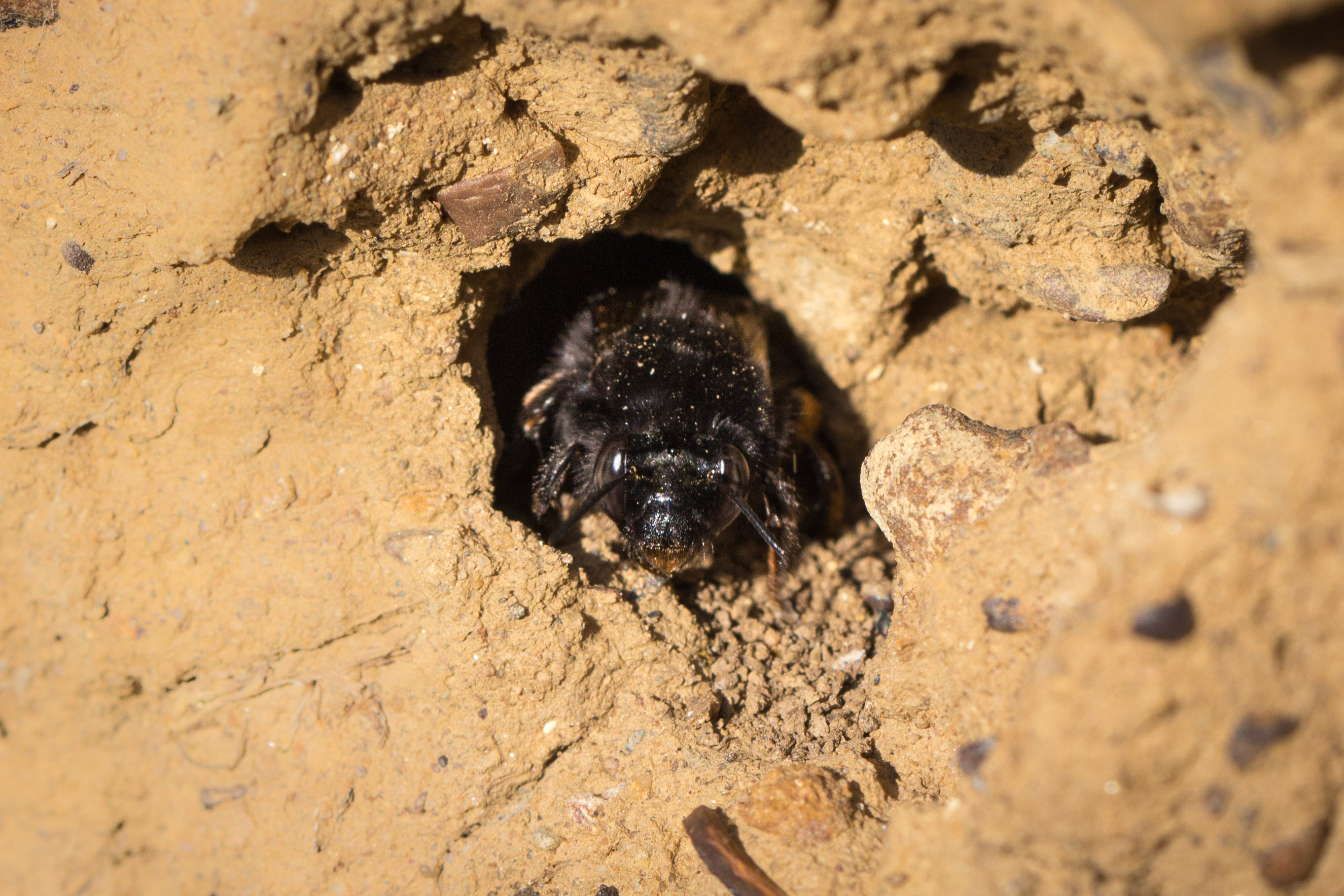
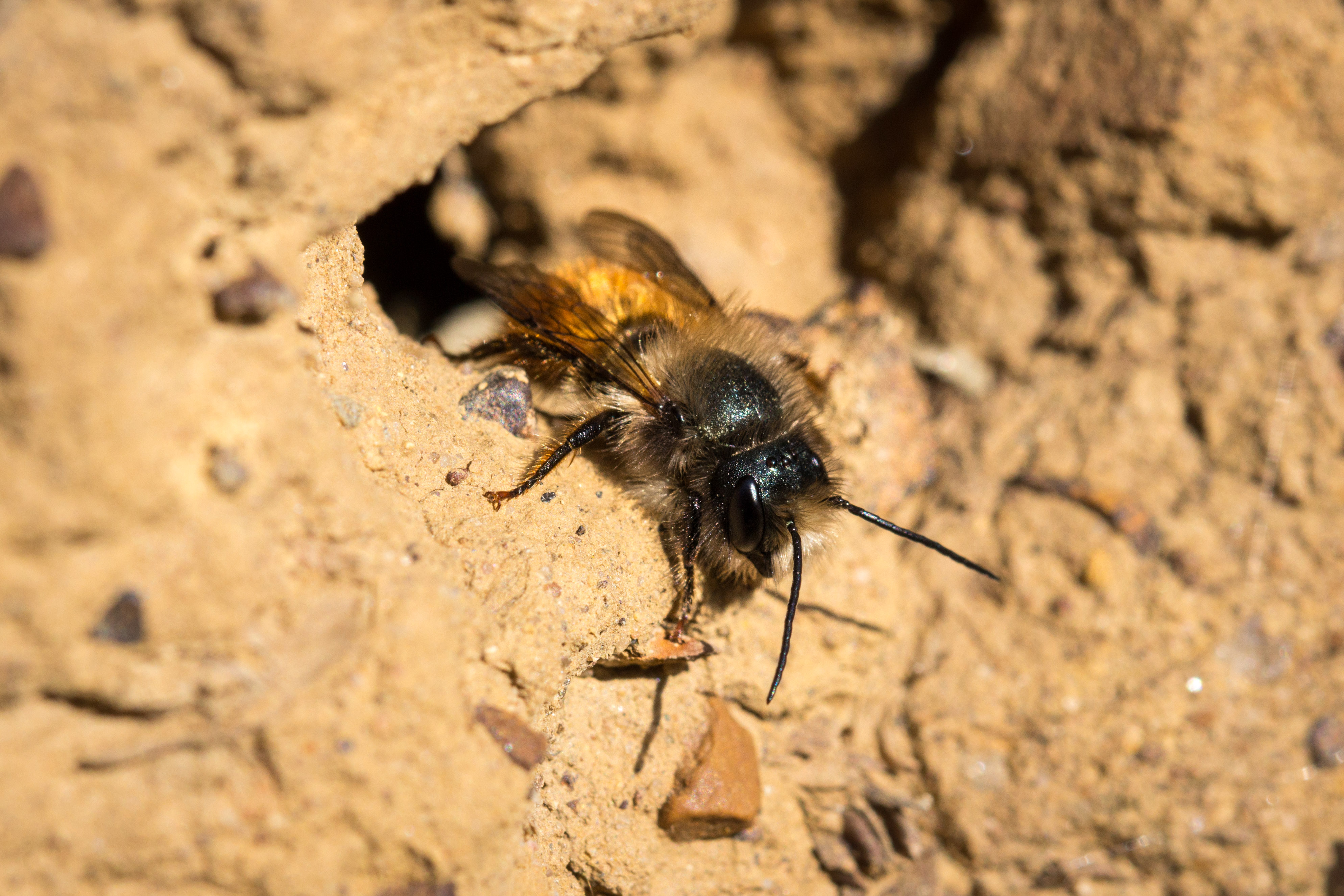
I first wrote about the bees in this wall seven years ago.  It is an old cob wall near the church in Nether Heyford, Northamptonshire, one of several similar walls in the village.  The wall is hundreds of years old and is home to hundreds or even thousands of bees.  They are all solitary bees and most are either hairy-footed flower bees (Anthophora plumipes), common mourning cuckoo bees (Melecta albifrons), or red mason bees (Osmia bicornis). When I visited a month ago most of the bees I saw were male 
hairy-footed flower bees, hanging about in the hope of finding a freshly emerged female.  When I returned last weekend all the males had gone (having mated and died) and the females were busy provisioning their nests in the holes in the wall.

This one is just leaving for a foraging trip.

Here is a female returning with pollen and nectar.

The bees remember roughly where their nests are but sometimes take a few moments to locate the right hole.  Their navigation might be put off by me standing in the way.

Each nest has several cells, each containing an egg and enough pollen and nectar to sustain the growing larva.  These two bees were shovelling loose material back into their nests, presumably to seal in a cell they had provisioned and completed.


Aggregations of hairy-footed flower bees attract a kleptoparasitic cuckoo bee, Melecta albifrons.  The females of this bee loiter near the nest entrances, hoping to sneak in and lay their own eggs while the owners are away.

The male bees hanging around the wall this time were red mason bees (Osmia bicornis).  Their flight season is slightly later so most of the females were yet to emerge.

Here is a short video to give a flavour of what was going on.  Three species are visible, female hairy-footed flower bees (round and black), common mourning cuckoo bees (thinner and dark), and male red mason bees (small and red).


A few yards away in the churchyard I saw Melecta albifrons,

ashy mining bees (Andrena cineraria),

and tawny mining bees (Andrena fulva).


Mining bees have a similar lifestyle to flower bees and mason bees but they dig their nests in the ground.  They also attract their own specific cuckoo bees.

Back at the wall I found a spider that had just captured a cuckoo bee.  The spider was also hiding in one of the holes and had built webs across several of the others.  It was in the process of wrapping the bee, which was still alive, and then appeared to bite it, presumably with a venomous or paralysing bite.


I think this is probably a female noble false widow (Steatoba nobilis).  This spider first appeared in Devon 150 years ago, having been imported from the Canary Islands in a consignment of bananas, and is now widespread across the southern half of the UK.  For a description of the false widow spider and some amazing photos see Jason Steel's website.

Spring is later up here in the north so I hoped some of the local male A. plumipes would still be around.  Yesterday I was in Morpeth, 10 miles north of here and 230 miles north of my mother's village, and there they were.  I don't know where the nest site is in Morpeth but I saw several male bees sipping nectar in the town centre.


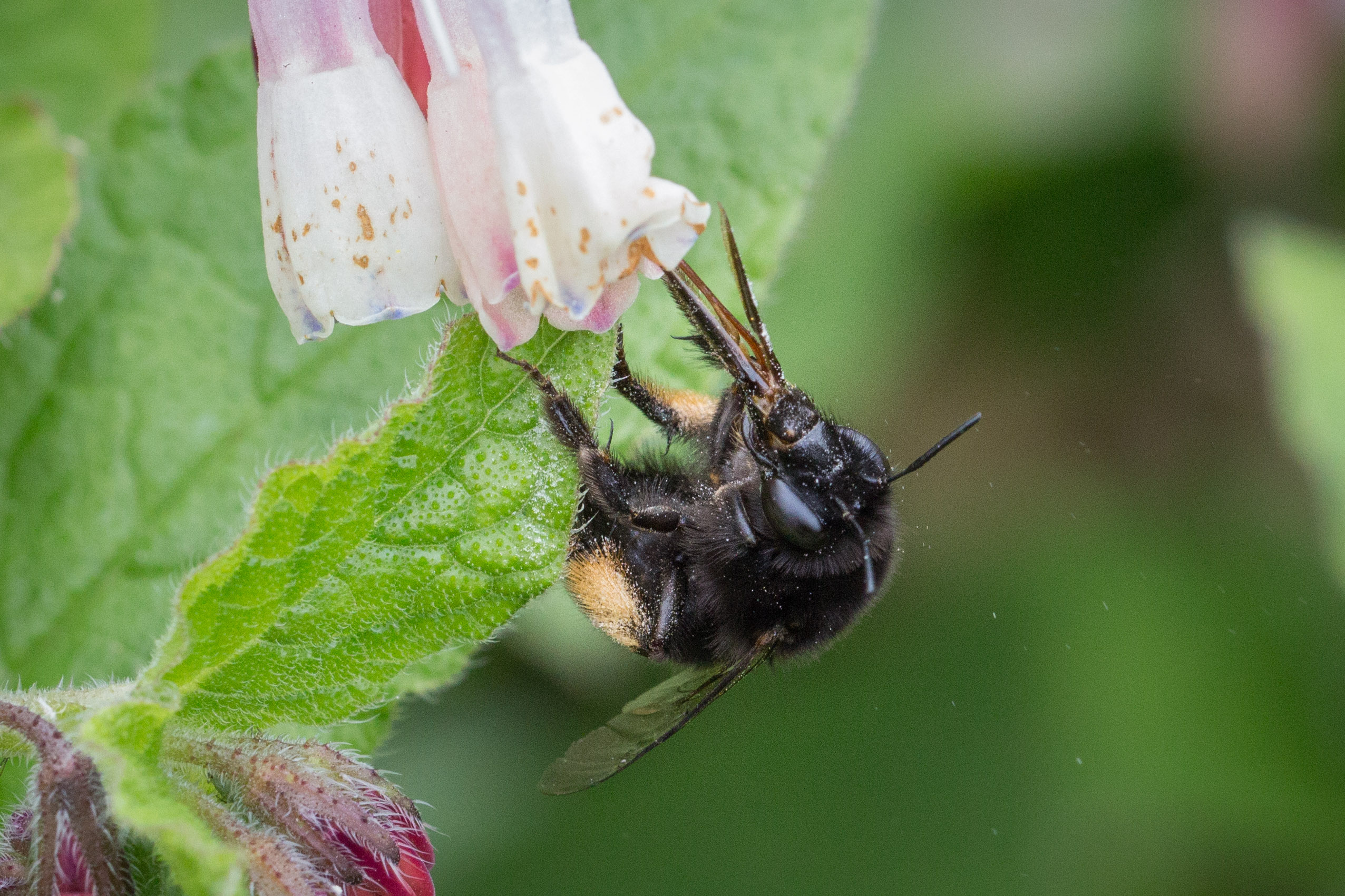
There were more females on the wing, this one showing how her proboscis splits to show the tongue and folds away underneath her "chin" when not needed.


The Morpeth hairy-footed flower bees were first recorded last year and are spreading south through Northumberland, presumably from the original outlier population in the Alnwick Garden.  I hope it won't be long before they reach Newcastle.