My Blog List

Showing posts with label Hairy-footed flower bee. Show all posts

Wednesday, 8 March 2023

A cob brick bee house

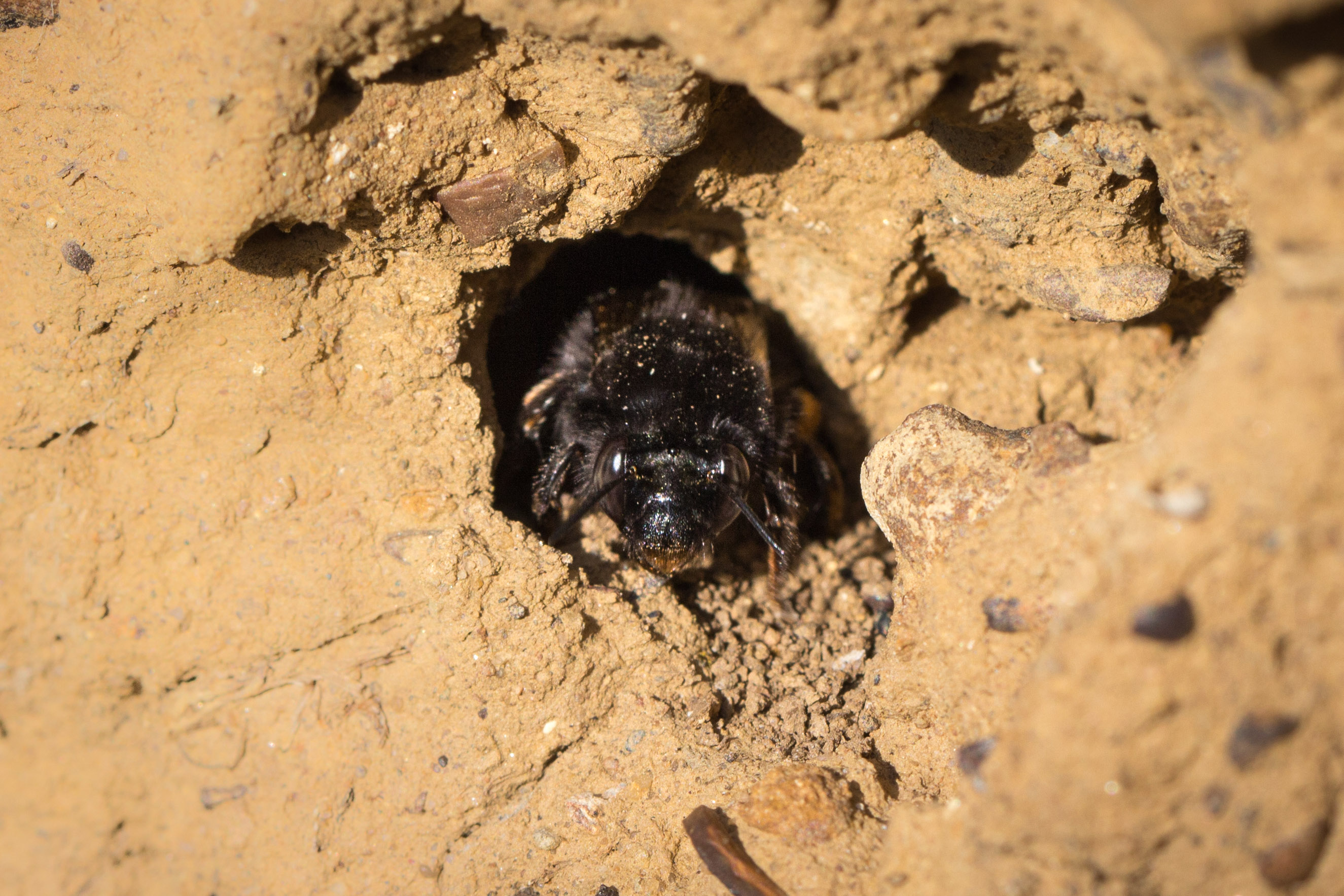
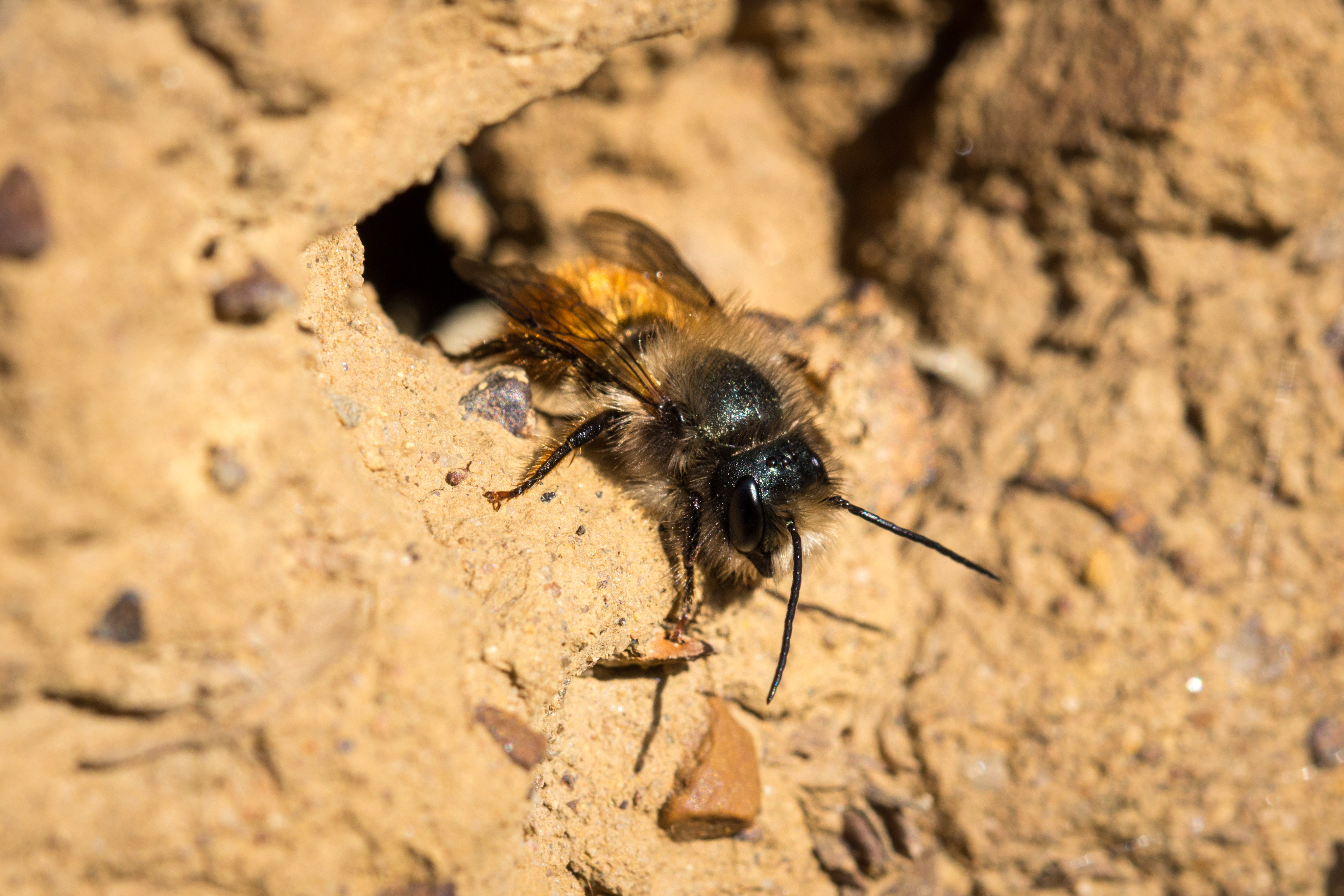
March is the time to look out for hairy-footed flower bees (Anthophora plumipes), one of my favourites.  They fly in spring, being among the first solitary bees to emerge from hibernation. They nest in cob walls and old mortar, often in large aggregations.  Their whole season is over by early summer and the next generation of bees waits in the safety of the wall before emerging the following spring to start the cycle over again.

I read an article in the BWARS magazine by John Walters, an entomologist from Buckfastleigh in Devon, on making a cob brick bee house for hairy-footed flower bees and was inspired to have a go.  A year ago I followed his recipe using cricket pitch loam mixed with a little sharp sand, some chopped straw and enough water to make it all stick together.  You can see John Walters' videos on how to make cob bricks for hairy-footed flower bees, part 1, part 2 and part 3.  I also took advice from my friend Chris Henderson, a retired doctor and renowned mud-brick house builder in Tasmania. Chris said the secret is to let the cob dry slowly, out of the sun, so it doesn't crack and fall apart. The bricks then have to be kept dry and put where the bees can find them.  I built a shelter from a few old planks and put it close to some pulmonaria plants, the bees' favourite flower.

I didn't see bees flying into the bricks while I was watching but within a few weeks there were signs of activity with what looked like spoil from excavation below a couple of the holes and at their entrances.


When I peered in at the end of the season with a macro lens and ring flash I could see something at the end of four of the holes.


My hope is that these are sealed bee nests.  I found a PhD thesis written by Radha Devkota Adhikari on the use of the hairy-footed flower bee for strawberry pollination in greenhouses in Japan.  It includes this photo of the inner structure of a nest and says "the inner walls of both provisioned cell and pre-chamber were coated white" so this could be what I am seeing in mine.


I have set up the bee house again, ready for the bees to emerge (I hope) later this month.  Ever the optimist I have also built a small cob-filled observation panel with a perspex window in the hope that I may be able to see what happens inside.  There are four small starter holes and if a bee does move in I'll keep my fingers crossed that it excavates next to the window so I can see what is going on.

I have also built a much more stylish Mark II version for the new season.  It contains Victorian land drain pipes filled with the same cob.  It is now in position in the hope that the bees will take to it.  If they do I'll post an update here.

Friday, 29 April 2022

Back to the wall of bees


I first wrote about the bees in this wall seven years ago.  It is an old cob wall near the church in Nether Heyford, Northamptonshire, one of several similar walls in the village.  The wall is hundreds of years old and is home to hundreds or even thousands of bees.  They are all solitary bees and most are either hairy-footed flower bees (Anthophora plumipes), common mourning cuckoo bees (Melecta albifrons), or red mason bees (Osmia bicornis). When I visited a month ago most of the bees I saw were male 
hairy-footed flower bees, hanging about in the hope of finding a freshly emerged female.  When I returned last weekend all the males had gone (having mated and died) and the females were busy provisioning their nests in the holes in the wall.

This one is just leaving for a foraging trip.

Here is a female returning with pollen and nectar.

The bees remember roughly where their nests are but sometimes take a few moments to locate the right hole.  Their navigation might be put off by me standing in the way.

Each nest has several cells, each containing an egg and enough pollen and nectar to sustain the growing larva.  These two bees were shovelling loose material back into their nests, presumably to seal in a cell they had provisioned and completed.


Aggregations of hairy-footed flower bees attract a kleptoparasitic cuckoo bee, Melecta albifrons.  The females of this bee loiter near the nest entrances, hoping to sneak in and lay their own eggs while the owners are away.

The male bees hanging around the wall this time were red mason bees (Osmia bicornis).  Their flight season is slightly later so most of the females were yet to emerge.

Here is a short video to give a flavour of what was going on.  Three species are visible, female hairy-footed flower bees (round and black), common mourning cuckoo bees (thinner and dark), and male red mason bees (small and red).


A few yards away in the churchyard I saw Melecta albifrons,

ashy mining bees (Andrena cineraria),

and tawny mining bees (Andrena fulva).


Mining bees have a similar lifestyle to flower bees and mason bees but they dig their nests in the ground.  They also attract their own specific cuckoo bees.

Back at the wall I found a spider that had just captured a cuckoo bee.  The spider was also hiding in one of the holes and had built webs across several of the others.  It was in the process of wrapping the bee, which was still alive, and then appeared to bite it, presumably with a venomous or paralysing bite.


I think this is probably a female noble false widow (Steatoba nobilis).  This spider first appeared in Devon 150 years ago, having been imported from the Canary Islands in a consignment of bananas, and is now widespread across the southern half of the UK.  For a description of the false widow spider and some amazing photos see Jason Steel's website.

Spring is later up here in the north so I hoped some of the local male A. plumipes would still be around.  Yesterday I was in Morpeth, 10 miles north of here and 230 miles north of my mother's village, and there they were.  I don't know where the nest site is in Morpeth but I saw several male bees sipping nectar in the town centre.


There were more females on the wing, this one showing how her proboscis splits to show the tongue and folds away underneath her "chin" when not needed.


The Morpeth hairy-footed flower bees were first recorded last year and are spreading south through Northumberland, presumably from the original outlier population in the Alnwick Garden.  I hope it won't be long before they reach Newcastle.

Saturday, 10 April 2021

The march of hairy feet


The first time I saw these bees I didn't know what they were.  I saw smaller brown bees and larger black bees in The Alnwick Garden a few years ago and it was only when I got home to look them up I found they were the male and female of the same species, Anthophora plumipes, the hairy-footed flower bee.  At the time the Alnwick population was a complete outlier, 100km or so from the next nearest confirmed population.  In recent years they have been spreading south in Northumberland and recently they were reported in Morpeth, only 15km north of here as the bee flies, so yesterday I went to have a look.  I soon found up to a dozen males flying around the cowslips and primula hybrids in the Turner Garden,  They were patrolling and chasing each other, always on the lookout for a female and occasionally sipping nectar to refuel.  It makes photographing them a challenge but eventually a couple paused for breath to show how the get their name.

Most of the time they were zooming around between the flowers but there was a brief opportunity when they were refuelling.  Note the long proboscis which allows them to use long tubular flowers


When a female arrived it caused great excitement and they hovered close by, hoping to strike lucky, even though she had no interest in them as she was presumably already mated and was busy collecting nectar and pollen.


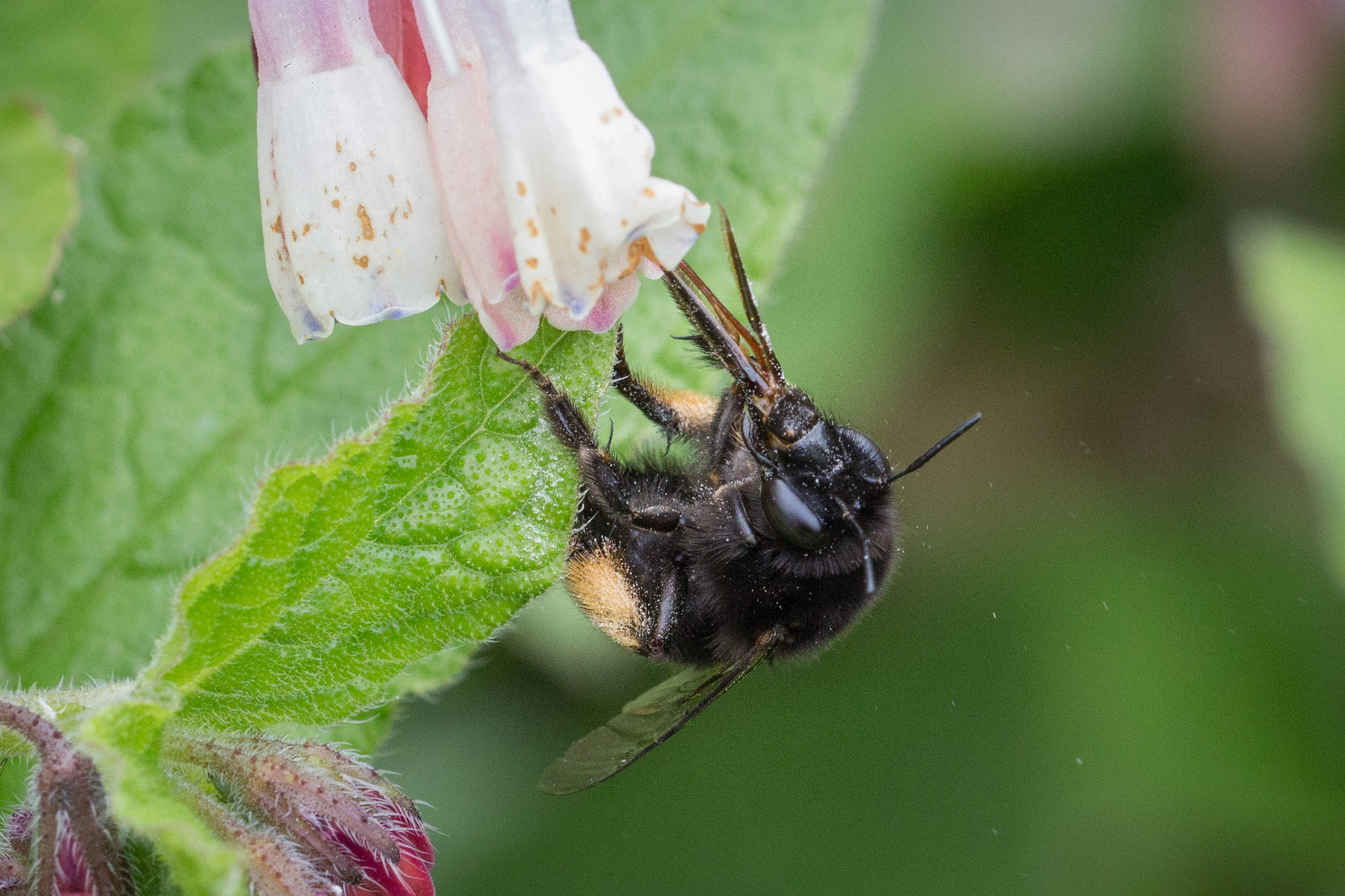
This male must be a bit short-sighted as he was propositioning a queen red-tailed bumblebee (Bombus lapidarius).

The females are black with an orange pollen brush on each back leg.

This one has already loaded up with yellow primula pollen.

The female also has a long proboscis to reach the nectar.  It it often cleaned while flying between flowers.

The tongue is even longer and is pushed out through the tube-like proboscis.

There were plenty of other bees about while I was watching, including a garden bumblebee (Bombus hortorum) the longest-tongued of our bumblebees.

You can see how short the red-tailed bumblebee's tongue is in comparison but she can obviously still reach the nectar.

And this tiny bee which is a male tawny mining bee (Andrena fulva).

And just before I left a female tawny mining bee landed right in front of me, wanting also to have her photo taken.

On the way back to the car, several hundred metres away I saw this.

And near the car park, this.

So hairy-footed flower bees seem quite well established in the town and must have been there for some time.  It is only six years or so since they were first recorded in Northumberland and in that time they have moved 30km south from Alnwick to Morpeth to be only 15km away from here.  If they continue to spread I hope to see them here within a few years.  I have already drilled holes in the walls so they will have somewhere to live and there are plenty of pulmonaria flowers, grape hyacinths and cowslips for them in my garden.