My Blog List

Showing posts with label Jay. Show all posts

Wednesday, 4 August 2021

Out and about in July

July seems to have been mainly about foxes and otters and moths but I did see a few other things, mainly insects. Dragonflies included four-spotted chasers,

 male emperors,

male black-tailed skimmers,

male broad-bodied chasers,

a male southern hawker,

a male ruddy darter,

and common darters.

I saw my first female and male emerald damselflies of the season.

In two different nature reserves within a mile from here I saw white-letter hairstreaks.  A slightly battered male in Weetslade Country Park,

and a female at Gosforth Nature Reserve.

I saw a lot of common lizards in Harwood Forest but most of them were too quick for me and even this one was shy.

July was very warm.  We had one very wet weekend so the average rainfall averaged out as average but it was mostly very dry.  Good for some things, like insects, but not for others, such as badgers and hedgehogs (and the garden).

Wednesday, 10 June 2020

Jays in the garden


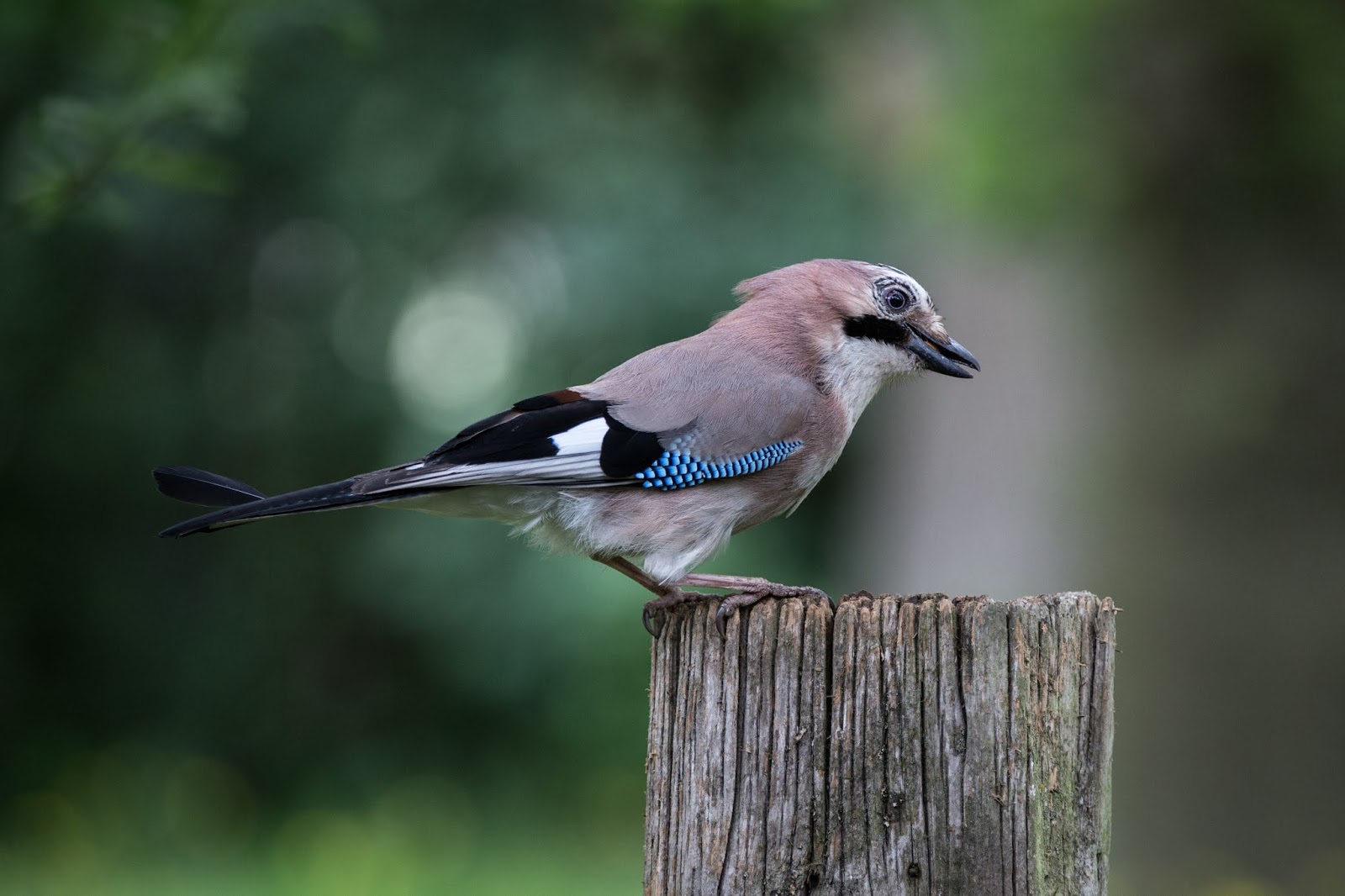
A pair of jays have been spending a lot of time in the garden.  One of them is usually to be found under the peanut feeder, waiting for a woodpecker to drop a shower of peanut fragments.  Even better is a whole peanut.


This is how a jay looks when all the peanuts have gone.

The jays had a nest in the top of a dead sycamore.  I didn't know it was there until I heard the commotion as it was attacked by a carrion crow.  I fear that the eggs or chicks didn't survive but at least the adults are still here.  The crows have been in my very bad books since I caught them chasing the sparrowhawk weeks ago and they know it.

Saturday, 2 May 2020

Garden birds in April

This blog has been rather overrun by mammals recently but I haven't given up on bird photography.  April was a good month for birds in the garden, including the arrival of chiffchaffs and blackcaps from Africa.

I saw the male kestrel again very early one morning.  Twice he dived down to the lawn to catch something which I think was probably a worm.  Although their main prey is small mammals, kestrels eat other things including small birds, insects and worms.


A pair of jays are in the garden every day.  They are the prettiest crows and are great opportunists.  This one was standing under the peanut feeder while a woodpecker was feeding, waiting to catch the bits as they fell.


Jackdaws also come down to the feeders and stand underneath.


Jackdaws are more agile than jays and can get onto the feeders themselves.

I also have a woodpecker feeder which has holes filled with suet.

It also attracts other birds.


And you-know-who is still around, keeping them all on their toes.

There were lots of other birds I didn't take photos of - all the usual suspects plus reed bunting and green woodpecker. The only disappointment is that my camera nest box is unoccupied for the first time since it was put up in 2009.  I have modified it slightly to move the camera so that it can see the whole floor and the entrance hole so it would have given good pictures.  Maybe next year.

Friday, 19 January 2018

JayCam

When I set up the trail camera I usually bait it with peanuts.  I most often get photos of a badger or a fox, both of which are keen on peanuts, but occasionally something else turns up. This time the only photos were of a jay.  It must have been having a great time as it triggered a lot of photos.


It kept going until it was almost dark.

And was back again first thing the next morning.


When I checked the camera later all the peanuts had gone so I reckon the jay had eaten or cached the whole lot. Obviously there could have been more than one jay as they all look alike to me.

Thursday, 16 November 2017

Stocking up for winter

At this time of year jays are very common in the garden.  From September I can hear them screeching in the tops of the oaks, where I presume they are collecting acorns.  By November many of the acorns have fallen and the jays collect them from the ground.  This one was picking them up and burying them in the lawn, only a few metres from where it found them.


Jays bury acorns to store them for the winter and this process is thought to be the main one by which the oak spreads its seeds.  Oaks don't usually regenerate in established woodland as they are out-competed by other faster growing trees.  Jays prefer to bury their treasure in more open settings such as scrub or grassland.  It has been estimated that a jay may store as many as 5000 acorns in a season and may travel more than a mile to bury them.  It will remember the position of most of them and recover many of them but those that are missed have the opportunity of growing into oak trees.

Saturday, 12 August 2017

Hogging the limelight

Two young jays have been very frequent visitors to the garden in the past two or three weeks.  This one is planning a career on the stage.