My Blog List

Showing posts with label Butterfly. Show all posts

Friday, 20 October 2023

Autumn butterflies


The storm over the the past couple of days probably means this is nearly the end of the season for most of our insects.  Earlier in the week the butterflies were making the most of some October sunshine, fuelling up on rotten apples before going into winter hibernation.  I saw up to 20 red admirals and just a few commas.

.


It hasn't been a great year for apples, with quite a lot of fallers but at least the butterflies and wasps have benefitted.

Sunday, 23 July 2023

Purple rain

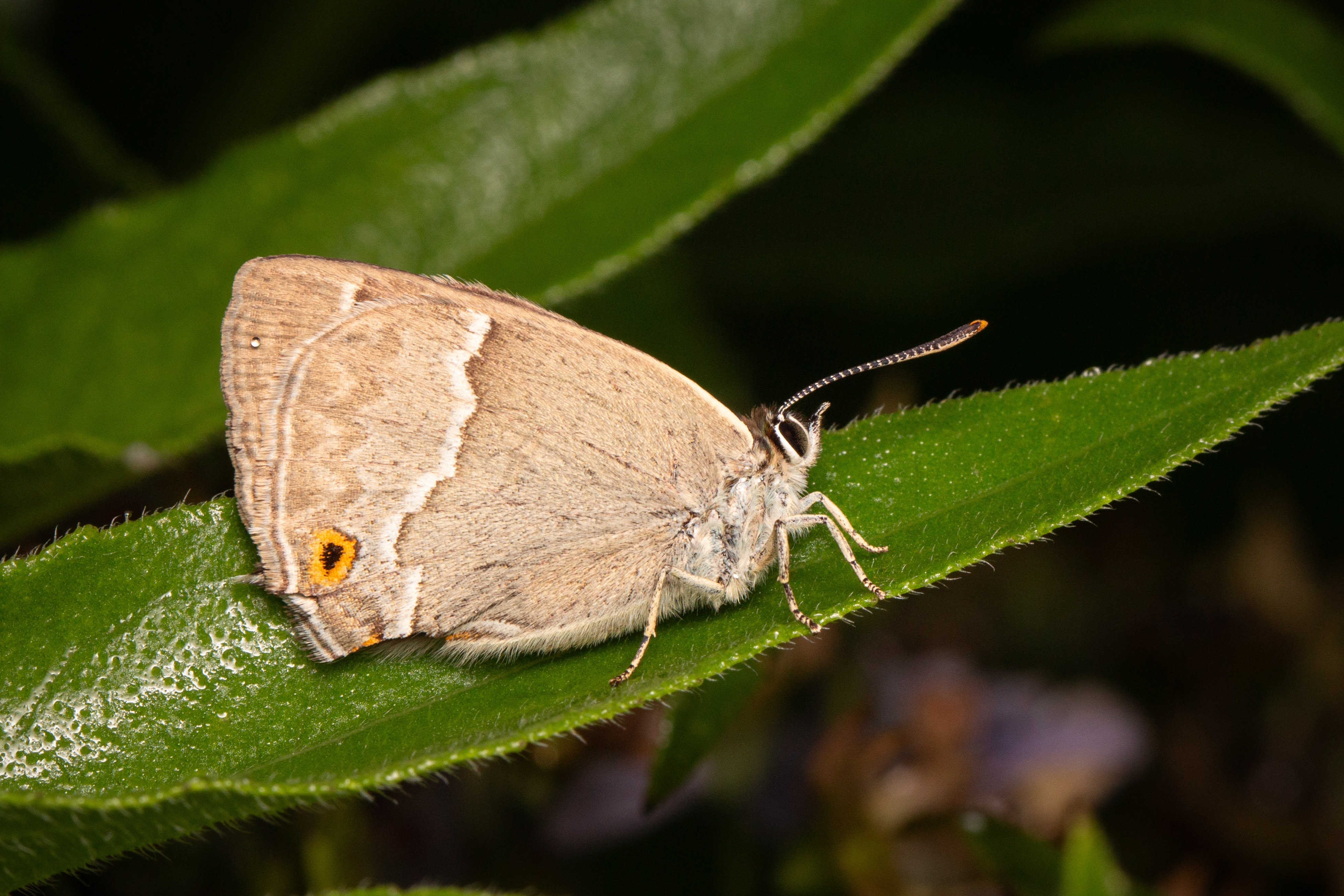
It has been a horribly wet weekend with almost non-stop rain.  When it eased slightly this afternoon I took my umbrella and went for a walk round the garden with my camera, hoping perhaps to find a few soggy bumblebees.  Instead I found a butterfly sitting on top of a sunflower leaf in the rain.  For a moment I didn't recognise it and then couldn't quite believe it was a purple hairstreak.

Having checked my photo against my field guide I brought the butterfly into the dry.  Unlike other hairstreaks, purple hairstreaks characteristically bask with their wings outspread but even indoors this one wasn't obliging.

To provide it with a bit of "sunshine" I brought out an anglepoise lamp and then it did open its wings to show it is a female, with iridescent patches on the forewings.

Perhaps attracted by the warmth it then flew into the hood of the lamp.

We agreed that wasn't a sensible place to stay so it obliged with a couple more photos before being released once the rain had eased.


Purple hairstreaks spend most of their time high in the canopy of mature oak trees (of which there are quite a few in the garden) so it isn't such a surprise to find one here.  However, because they feed on honeydew from aphids they rarely come down to ground level.  Now I know they are here I'll look for the males flying high in the trees on sunny afternoons (if we have any). 

Wednesday, 4 August 2021

Out and about in July

July seems to have been mainly about foxes and otters and moths but I did see a few other things, mainly insects. Dragonflies included four-spotted chasers,

 male emperors,

male black-tailed skimmers,

male broad-bodied chasers,

a male southern hawker,

a male ruddy darter,

and common darters.

I saw my first female and male emerald damselflies of the season.

In two different nature reserves within a mile from here I saw white-letter hairstreaks.  A slightly battered male in Weetslade Country Park,

and a female at Gosforth Nature Reserve.

I saw a lot of common lizards in Harwood Forest but most of them were too quick for me and even this one was shy.

July was very warm.  We had one very wet weekend so the average rainfall averaged out as average but it was mostly very dry.  Good for some things, like insects, but not for others, such as badgers and hedgehogs (and the garden).

Thursday, 3 June 2021

Out and about in May

The birds don't seem to have been much affected by the late spring although the siskins were here until mid May, when they presumably left for the forests to think about nesting.  The starlings were well ahead of them and their chicks fledged on the 16th.  These photos were taken the day before.


Oystercatchers are nesting on a rooftop across the road and come to the golf course to feed.  They seem to be getting juicy grubs rather than worms and are unfazed by the golfers.


May sees the first counts for the BTO Breeding Bird Survey on my 1km squares near Wark Forest and in Harwood Forest.  The first of these was strange this year with only four species recorded (including one pheasant).  The commonest bird was meadow pipit and I stumbled across a nest so I took a quick photo before moving on.  Despite its name the BBS doesn't look for evidence of breeding, just presence in the breeding season.  I'll do another two counts in June.

At Banks Pond the Canada geese have six goslings

and the swans have five cygnets.  There is a lot of conflict between the male swan and the adult geese.


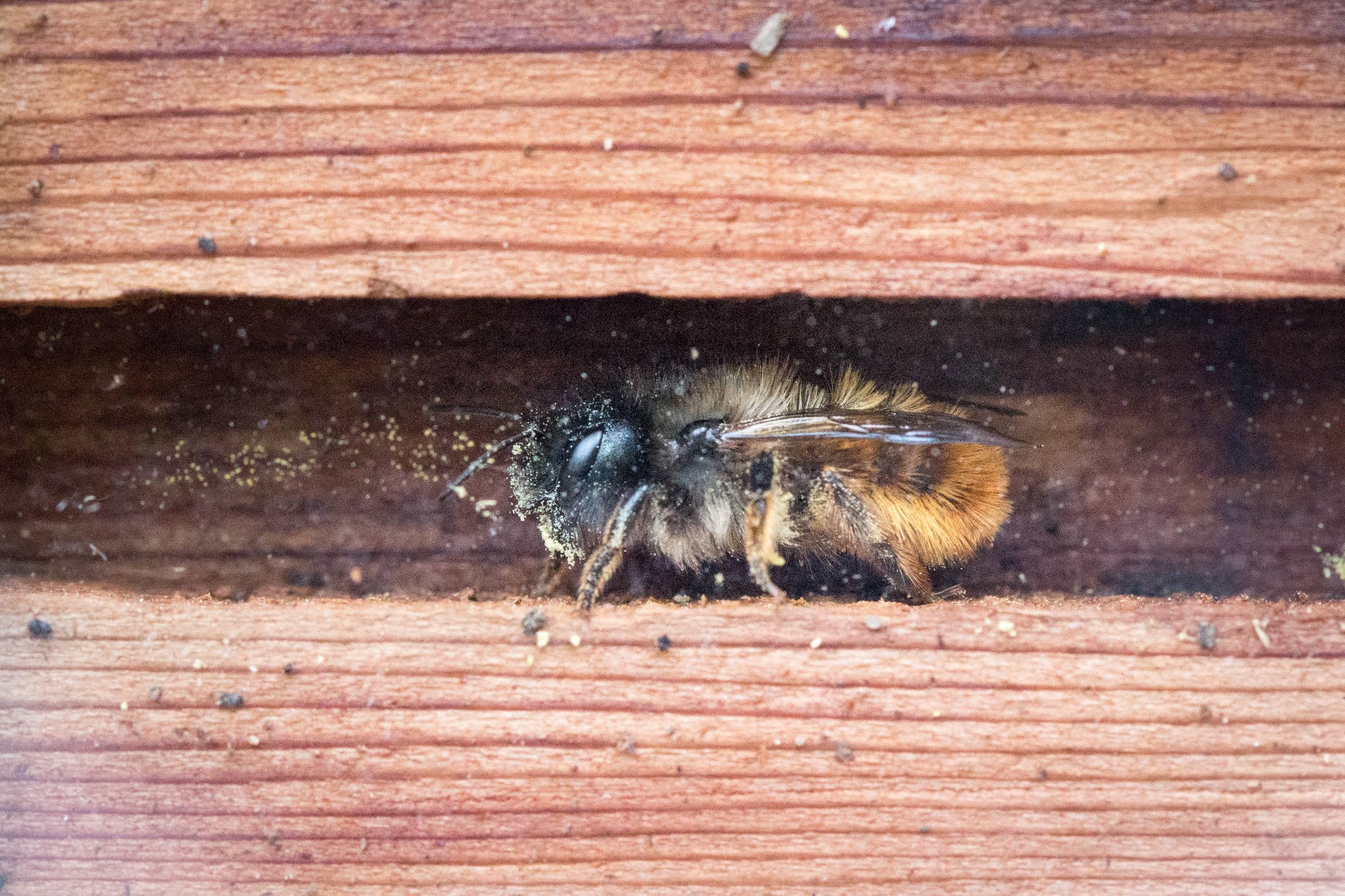
Red mason bees first appeared in the garden in April but then disappeared in the cold weather.  They have been active again in the past week or so.  Two females are building in my observation bee house.


This poor bee tried to fly through the spray from my watering can.  I picked her up and sat her on my finger while she got herself warmed up and dried off a bit, although she lost much of her pollen load.  I think she is a chocolate mining bee (Andrena scotica).

My meadow is in its second year and is already looking better than last year (when there was a drought in spring).  It was satisfying to see a female orange tip butterfly on lady's smock.

Damselflies were out and about by mid May and I have seen large red,

common blue,

azure,

and blue-tailed damselflies.

It was only on the last day of the month that I saw my first dragonflies of the year, four-spotted chasers.  Their emergence is a couple of weeks later than last year - I expect they have been waiting for some decent weather.  The first sign was an exuvia, the discarded exoskeleton of the larva.
Close by was a brand new dragonfly about to make its maiden flight.

This one was still resting on its exuvia, with a damselfly exuvia close by.

As I watched, most of these dragonflies few into the nearby trees where they will stay for a few days until returning to the pond.

It feels as if the calendar has slipped a month.  We had March weather in April and have now had April weather in May. Apart from the last three or four days May was cold and wet, so the spring is late for some things, especially plants and insects.