My Blog List

Thursday, 12 November 2020

FoxCam in the garden

I don't see much of the foxes these days because they often don't arrive until after I have gone to bed, although yesterday evening the vixen, the dog and a cub were here at various times.  I rarely put a trail camera out because they are very wary of anything new or strange but I decided to have a look recently to see who has been turning up.

I used a "no-glow" camera with a 940nm wavelength which is invisible to human eyes but, as you'll see below, the foxes can see it.  And they were very wary, trotting backwards and forwards in the background before eventually one plucked up the courage to come to the biscuits.  It was the long-tailed (ie normal-tailed) cub, and it turned up while the security light was still on so the image quality was improved.  (There is a little bit of artefact from the camera or the close-focus lens.  The twinkly lights at the edge are car headlights from the road.)


Next up was the short-tailed cub.


Usually the foxes face the back door while they are eating, probably to keep an eye on the house rather than to assist the photography.  It was interesting how on this night both foxes faced the trail camera, 90° from their normal stance.

Later in the night it was very windy and the short-tailed cub returned after the security light had gone out.  It was trying to sneak a few more biscuits without getting too close to the camera.  You can see the reflections in the eyes of two other foxes waiting in the background.  The round artefact has disappeared so it must have been from the security light on the +0.5 dioptre lens.


One of the foxes in the background was the long-tailed cub which moved in next.  Again you can see the eyes of two foxes in the background.


When this cub had gone the other foxes walked off without coming close enough for me to see which they were.

Usually the foxes eat all the food during the course of the night but on this occasion some of the biscuits closest to the camera were left.  Nothing goes to waste, however, and the crows and magpies carried off the leftovers.


I may try again with the camera before the end of the year if I haven't seen much out of the window.  It will be good to know if the two cubs are still around.

Thursday, 5 November 2020

Out and about in October

I twice went to the coast in October looking for goldcrests but didn't see one.  Then last week I heard one in the garden. The first camera I grabbed has only a 300mm lens so the photos are a bit heavily cropped but they are not too bad. This is the first goldcrest I have seen here for almost 20 years but I expect they are here more often and I don't notice. I had forgotten they have such bright orange feet.


When I was at the coast at least I saw a few gulls.  Gulls are not always easy even though I went on a gull ID course last winter.  This one is easy - a great black-backed gull (I hope).

And a herring gull.

And a first winter herring gull (I hope).

This is a bit of an experiment.  I made a panorama of redshanks at St Marys.  It looks OK on my computer but I don't know how it will come out on the blog.  Click on the photo to enlarge it and see if it worth looking at.

In Gosforth Nature Reserve I met a young roe deer fawn, now in her dark winter coat.  She was curious but not alarmed, even though I was fairly close.


I always find flight shots very difficult but at least this heron, also in the nature reserve, is nearly in focus.

Back in the garden the wasps, bees and hoverflies were enjoying the Kniphofia caulescens.


October was mostly wet and windy, starting with Storm Alex and ending with Storm Aiden.  The charts don't show wind but confirm the cloudy wet weather.

Early in the month was the UK's wettest single day on record.  And this Met Office chart confirms that it rained almost every day, which was what it felt like.

The reimposed lockdown will have an impact on all our activities but I'll try to get some photos for November, even if only in the garden.  During the first lockdown there was so much see that I was posting every two days.  Now I'll try to keep up once a week.

Saturday, 31 October 2020

Spot the difference

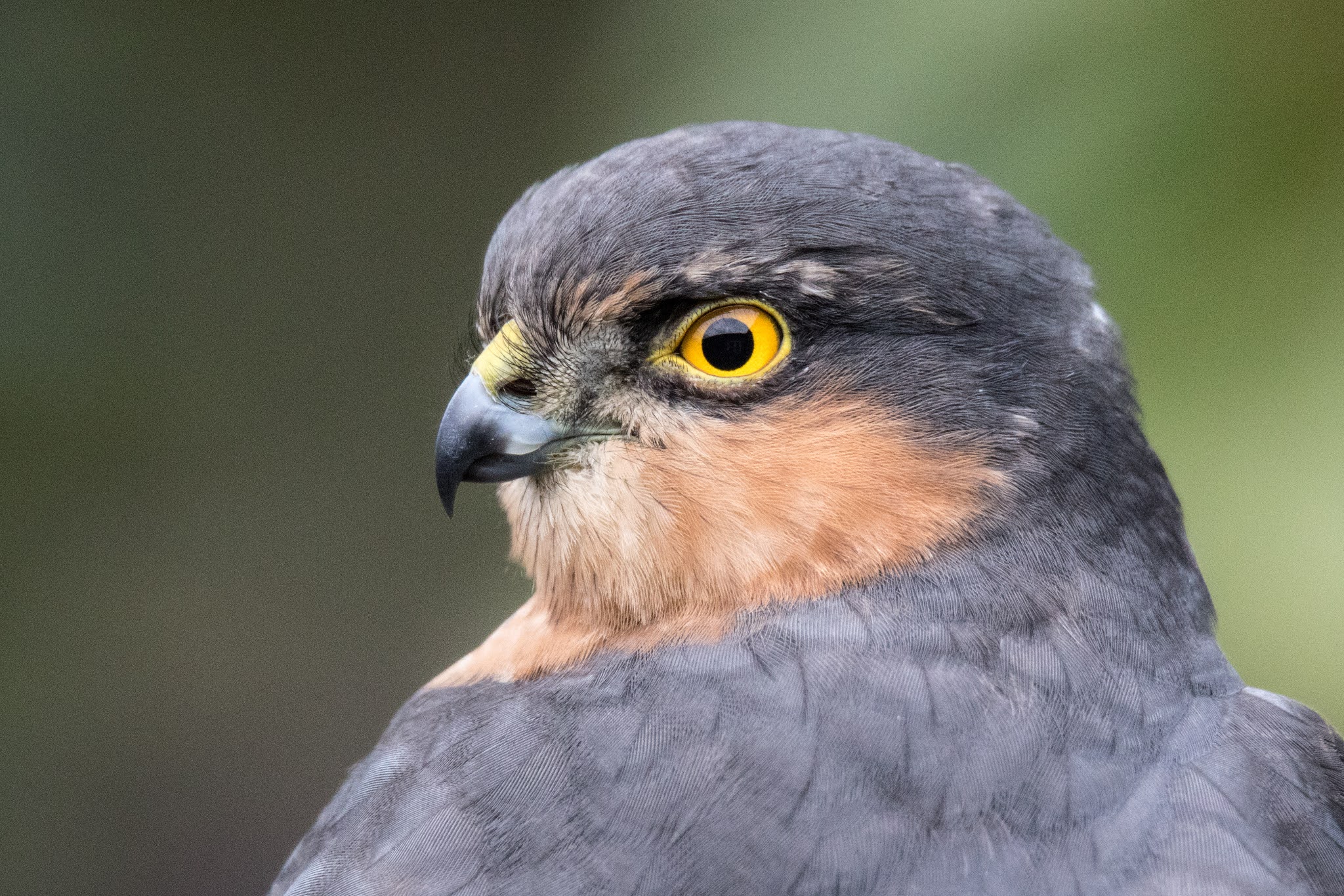
In each of the previous four winters one sparrowhawk has been present in the garden for months on end (or two birds, an adult and a juvenile, sharing the garden last winter).  This season seems different.  I have changed from saying the sparrowhawk to a sparrowhawk because I think I am seeing a different bird each time.  If so, there have now been four different adult males in the last two months. This is the new arrival.


The latest bird flew past my study window and straight to the perch in the kitchen garden.  He was here for about five minutes, long enough for a bit of scratching and grooming (from him) and long enough for me to take a few photos with each camera.  My immediate thought was that this bird looked a bit greyer than the last one and now having examined the photos I am fairly sure it is a new bird.  He sat with his back to the window so the views were limited.  This was a couple of weeks ago and have I waited in case he would return for more photos but so far he hasn't done so, at least when I was looking.  Here he is in portrait.

The first recent arrival was in late August - a rather dishevelled yearling that had been here as a juvenile the year before.

Next, in mid September was a paler bluish bird that I saw only once.

In late September another bird made a single appearance.  I was sure it wasn't one I had seen before and I was able to compare the appearances of all eight birds that have sat on the perch in the past four years.

Originally I was relying mainly on marks or scars on the cere but I have realised there are other distinguishing features as well. In this image they are: A, the profile of the cere (looking at the dark marks requires a front-on view which I haven't always achieved); B, the markings and colouring in front of the eye; C, the appearance of the medial canthus, or medial palpebral commissure, in front of the eye; D, the shape of the nostril; E, the shape of the lower mandible; and F, the more general colouring below and behind the eye.

Here are the five birds I have seen this year in date order - last winter's adult male together with the four recent birds from late August, mid September, late September and mid October.  If you click on the photos you should be able to see them a bit larger.


Having compared lots of other views I think the latest bird has most in common with the one that was here throughout last winter, which might explain why he knew where the perch was.  Here are a couple of other views to compare, each with last winter's adult on the left and the new bird on the right.  Using the criteria above I think they are fairly similar, although of course that could just mean they are related rather than being the same individual.


The new bird has very few marks on the cere and less of the apricot feather colouring above the eye and on the neck but I don't know how consistent these features might be over a year.

Here are the four recent birds in portrait to show differences in their tail feathers.  No 3 only sat facing the window while it was here.  You can see they are superficially very similar without closer examination.

I had assumed that a single bird would occupy a territory so there would be only one regular visitor to the garden, as in previous seasons.  In winter the resident UK population of sparrowhawks is boosted by visitors from Scandinavia and Europe so some of these could be new arrivals passing through.  The garden could also be at the point of overlap of two or three territories - Ian Newton's The Sparrowhawk (1986) says the male's winter territory is an average of 350 hectares, 10 times that of the breeding season.  Or the resident population could be more mobile outside the breeding season than I had realised.

Having a camera ready at the window with a 600mm lens (≍960mm with a crop sensor) has allowed me to get detailed views of these birds, all sat on the same perch less than 3m from the window (I recently moved it a bit closer).  Next time a sparrowhawk turns up for a photo I shall be able to look closely to see who it is.  If it is the latest bird back again I'll try to get more photos to compare with last winter.  Any comments will be welcome.

Wednesday, 28 October 2020

Not so common

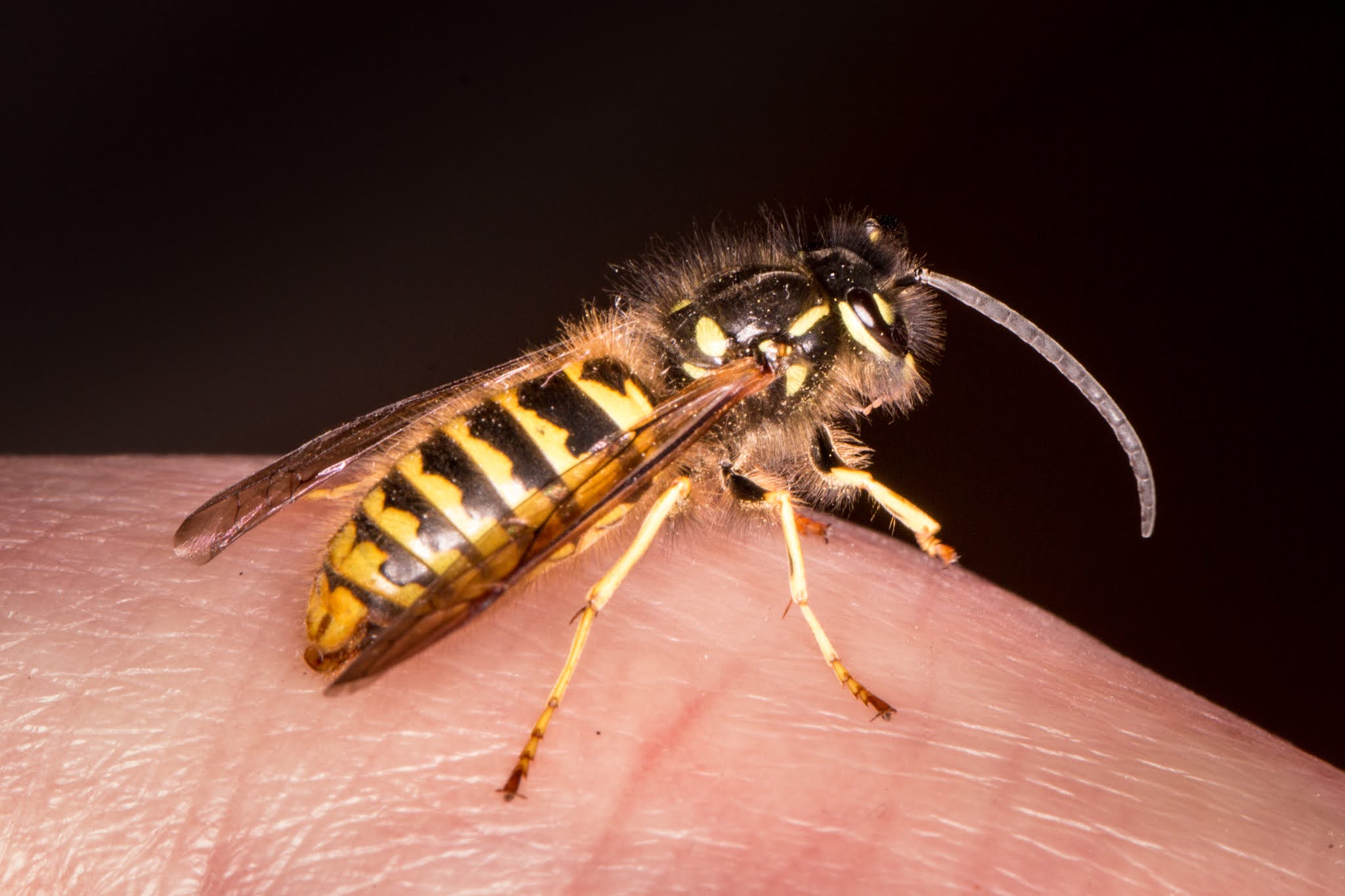
I found this wasp in the kitchen and he kindly agreed to a few photos before I let him go.  He is a male common wasp, Vespula vulgaris, and will spend most of his short life flying around looking for females and drinking nectar, so it is not all bad.  Note that he has 13 antennal segments (one more than a female) and seven abdominal segments (again one more than a female).  His antennae are noticeably long, and look more than 1/13 longer than the antennae of a queen.


The abdominal markings of a male Vespula vulgaris are very similar to those of a German wasp, Vespula germanica, but the facial markings are different.  These BWARS charts compare the appearances of queens (♀), males (♂) and workers (☿) of Vespula vulgaris (above) and Vespula germanica (below).

The BWARS website says that a typical Vespula vulgaris nest raises about 10,000 workers, 1000 queens and 1000 males in a season so one might expect to see roughly equal numbers of new queens and males around at the end of the season.  I see many more new queens in the garden than males, which must be something to do with their foraging preferences or other behaviour.  Even though there was already a queen hibernating  in the kitchen a couple of weeks ago there are still plenty of queens flying, and especially foraging on the Kniphophia caulescens, so this male wasp may yet strike lucky.

Saturday, 24 October 2020

Stocking up for winter

I was feeding coal tits in the woods when I heard a rustling in the branches and a small face peered out.  Realising that there was free food on offer, the squirrel came to join in.


Here it is doing a Tarzan impression.

This squirrel has notably dark colouring and is growing its ear tufts for the winter.


After a few minutes the squirrel decided it wanted to play a few rounds of a game known locally as "You give me two hazelnuts and I'll run and hide them".


When I offered two nuts it picked them up and searched my hand to see if there were more, but in the last clip it was interesting that when I offered three it took two, realised it couldn't carry three, and ran off with just two anyway.

This was a mesmerising encounter (for me) and I didn't film every round of the game.  At one point I went back to the car for more hazelnuts and the squirrel was waiting when I returned.  I hope it can remember where it put them all.