My Blog List
Wednesday, 15 April 2015
Monday, 13 April 2015
Nest box camera update 2
This is as far as the blue tits have got after the second week.
It still seems like slow progress in building the nest but compared with last year's birds at least this pair seem to know what they are doing. I can remember last year watching the birds come in with a beakful of stuff, peer around the box and then take it out again! The male bird seemed especially useless - I think he was working on the theory that it you are no good at the housework you won't get asked to help.
Yesterday it poured with rain most of the day and one of the birds came in for a while to dry off. They do stop bringing in material when it is raining.
I think the female is doing all the nest building - she organises the material by doing a circular dance with her wings fluttering, as here.
Today is the first time I have seen the two birds in the box together. The female (top) came in first and was begging for food from the male. When they are together you can see the brighter colours on the male.
There will be more frequent updates on progress in the nestbox on the Nestbox camera 2015 page via the tab below the header photo above.
Sunday, 12 April 2015
Saturday, 11 April 2015
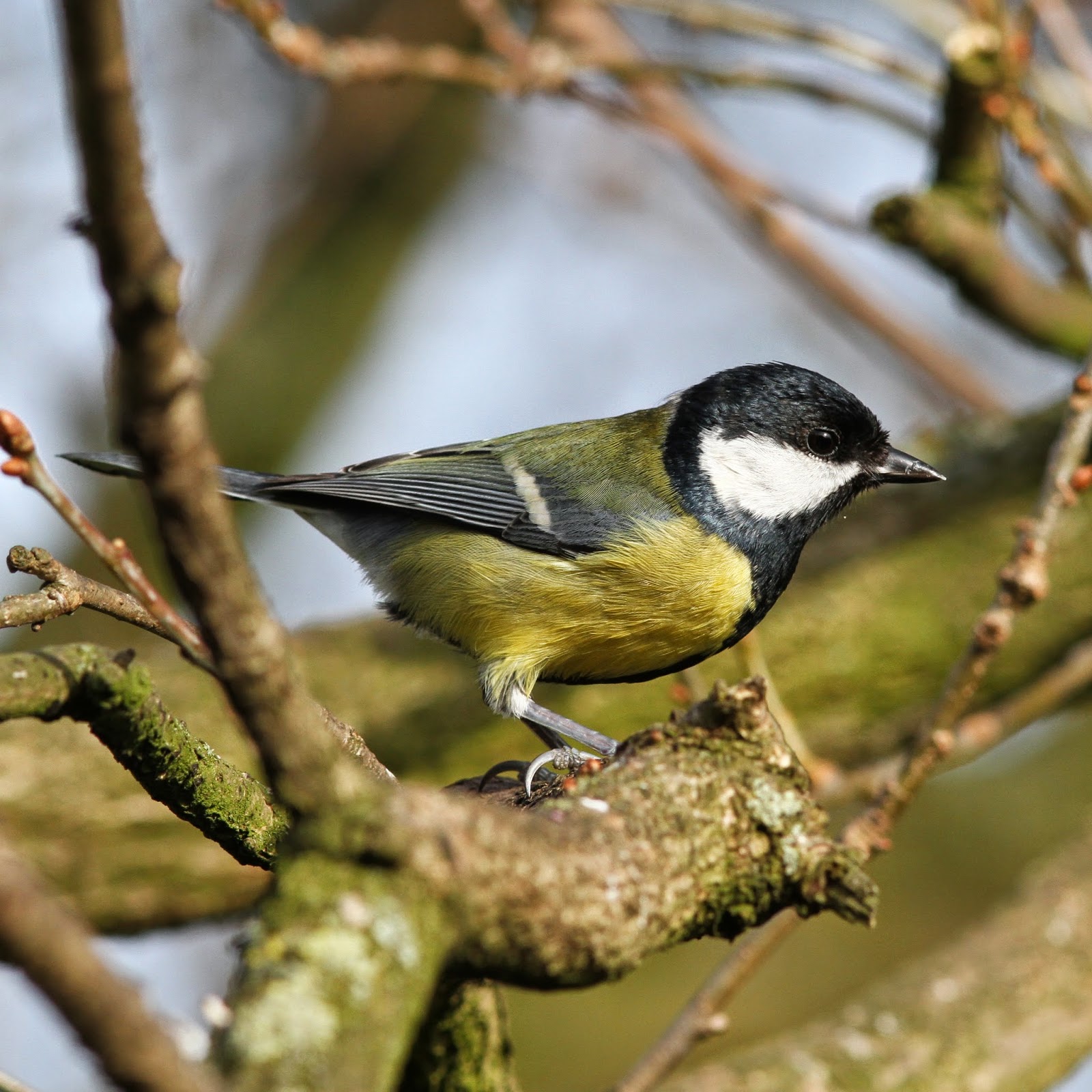
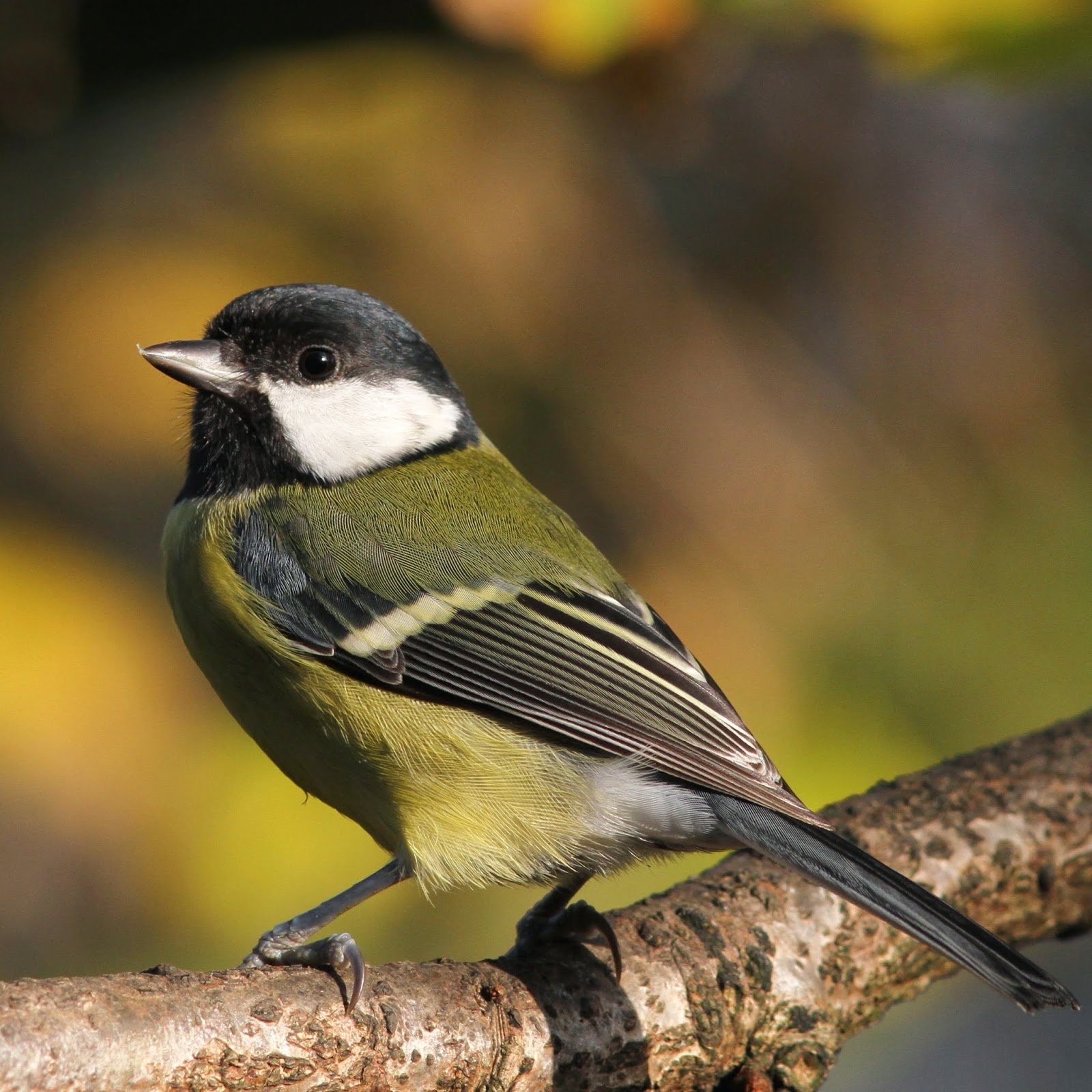
Bird of the week - Great tit
Great tits (Parus major) are the commonest birds in my garden. They are very obvious at this time of year with the males singing loudly and looking very handsome. Males have brighter colours and a glossier black head with a broader black chest stripe.
Great tits are present in about 3 in 4 gardens in the BTO Garden BirdWatch data and are present all year round in most.
Great tit numbers have increased steadily over the last 50 years, as shown by these BTO data. Like blue tits they are woodland birds that have adapted to thrive in gardens, taking advantage of bird feeders and nest boxes.
Great tits have a wide variety of calls and songs - if I hear a bird in the garden that I don't immediately recognise it is usually a great tit. Great tits are the main predator of bees in the garden - I expect they mostly pick off the dead or dying bees but they are often hanging around the hives. I haven't managed a photo of this behaviour yet but I'll post it when I do.
Listen to Sir David Attenborough's BBC Radio 4 Tweet of the Day on great tits here. Read more about great tits on the BTO website here and here and on BTO BirdTrends here.
Thursday, 9 April 2015
Common carder bee
It has been a delight to see bumblebees out and about over the past couple of weeks. So far I have seen white-tailed, buff-tailed, red-tailed and tree bumblebees but not an early bumblebee, despite its name. This afternoon I rescued a common carder queen (Bombus pascuorum) from the greenhouse. She looked exhausted and couldn't fly off.
I gave her a drop of strong sugar syrup and she perked up very quickly. While she was drinking I had the opportunity to take a few photos. Close up the bee's proboscis is amazing. It consists of a stiffer outer split tube, formed by the mandibles, and a longer, flexible, extendable inner tongue which is hairy at the end and is used to lap up the sugar. Normally of course the tongue is poked down the inside of a flower. Bumblebees have longer tongues than honey bees and can drink nectar from deeper flowers.
After a few minutes this bee flew off. Let's hope she establishes a successful nest and learns to stay out of the greenhouse.
Wednesday, 8 April 2015
Yellow faced birds
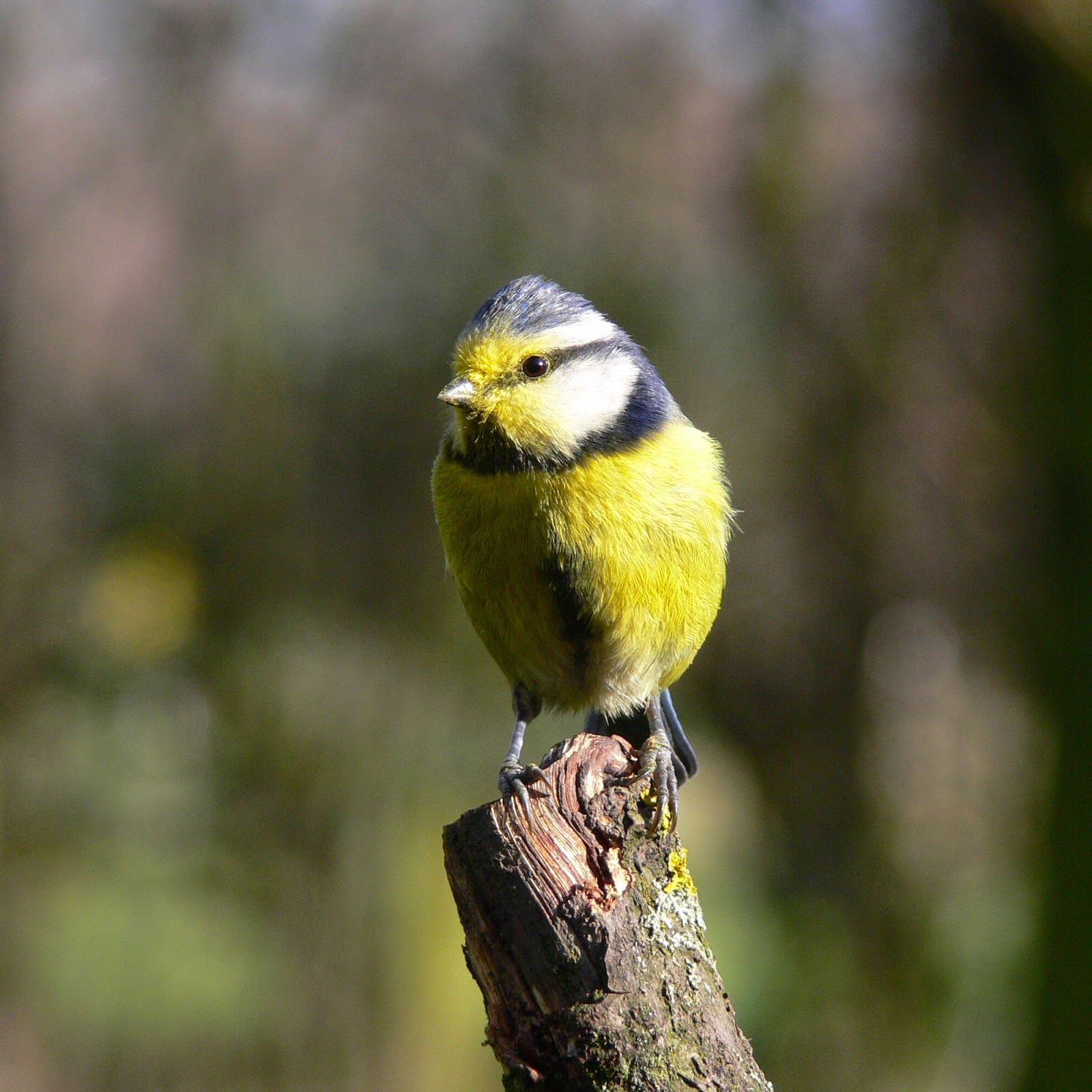
I have noticed a few yellow-faced blue tits, one yellow-browed redpoll, and a yellow-browed goldfinch in the garden. Thinking that the most likely explanation was pollen rather than these being new species, I turned to Google. It turns out that blue tits are known to visit goat willow and grey willow to feed on nectar from catkins, as shown in this article published in Bird Study in 1985. I also found a YouTube video of redpolls feeding on willow catkins which you can see here. This behaviour is also reported in blackcaps and whitethroats.
Then this morning going to work in Gosforth Park Nature Reserve I saw blue tits feeding on the pussy willow. It was too far away for a photo (and I didn't have a camera!).
Monday, 6 April 2015
Nest box camera update 1
This as far as the birds have got in the first week. Not a lot of progress but they usually make a slow start. Until the last two days the weather was poor so they may have been waiting for it to improve, otherwise the materials would be wet.
At least one of the birds pops in regularly to have a look around and to rearrange the few bits of moss and grass.
Here is a mouthful of moss coming in this morning. Things should speed up now that the weather is warm and dry.
At least one of the birds pops in regularly to have a look around and to rearrange the few bits of moss and grass.
Here is a mouthful of moss coming in this morning. Things should speed up now that the weather is warm and dry.
Just now the box was visited by a bumblebee queen who checked it out for a few minutes then left. As far as I can see it was not a tree bumblebee (Bombus hypnorum), the species that typically nests in bird boxes, so it may have just been inquisitive.
There is now a separate page, accessible via a tab below the header photo at the top, which will give more regular updates on the nest box.
Subscribe to:
Posts (Atom)
.jpg)
.jpg)
.jpg)
.jpg)


.jpg)
.jpg)
.jpg)
.jpg)
.jpg)