A sparrowhawk in Gosforth Park Nature Reserve. It was in deep shade a long way off but waited for me to extend the monopod and change the ISO etc. Very helpful.
My Blog List
Friday, 13 February 2015
Wednesday, 11 February 2015
Honey bee castes
Unlike bumblebees or solitary bees, honey bees overwinter as a colony. In each hive now is one queen with a few thousand workers, all female. The queen will produce new males (drones) in the spring by laying unfertilised eggs. I have had these three bees, one of each caste, in my freezer since last summer. (Replacing the queen is the method of dealing with a vicious colony of bees, as mine were.) This is my first serious attempt at macrophotography. The bees are perhaps slightly scruffy and I can't change their posture. Nevertheless they are fascinating creatures when viewed close up.
This is the queen.
This is the drone.
And this is the worker bee.
Here are all three together, the queen above and the drone below.
This is the queen.
Here are all three together, the queen above and the drone below.
The photos were taken with a Canon 650D, a Canon EF 100mm 1:2.8 IS USM macro lens and a Nissin MF18 ring flash.
I am certainly inspired to do more of this. If you want to see really good macro photos of bees of all sorts, especially solitary bees, visit Ed Phillips' website and blog here.
Monday, 9 February 2015
Ganoderma australe
Ganoderma australe (syn. Ganoderma adspersum) is the southern bracket fungus and lives on hardwoods, such as this splendid beech in Gosforth Park.
The underside is white when the fruiting body is young but becomes browner after release of the spores, as here.
This a woody fungus which has pores rather than gills (known as a polypore). It lives for many years and has growth rings like a tree. The shrivelled older parts of the fungus can be seen above the newer layers, as shown here. Ganoderma means shining skin although it doesn't look very shiny here. (Australe means southern, not Australian.)
The annual growth rings show the fungus is getting larger each year.
Here is a close up view of the underside showing the pores and where some of the cinnamon-coloured spores have fallen on to the bark of the tree.
Saturday, 7 February 2015
Bird of the week - Reed bunting
Mr & Mrs Reed Bunting of Big Waters. Sounds quite posh. Reed buntings have a pretty relaxed approach to family life as more than 50% of the chicks in a nest are not the offspring of the pair male. Read more about reed buntings on BTO BirdTrends here or BTO Garden BirdWatch here. To listen to the BBC Radio 4 Tweet of the Day on reed bunting click here.
Thursday, 5 February 2015
Pheasant update
I have posted news of this chap before (here and here) but I think it is time for an update. This is the sight that greets me each morning when I open the kitchen curtains. (That is supposed to be a lawn but look what the birds have done to it.)
He is usually standing waiting and when he sees me through the window he runs round to the front door, getting there before I can. He stands in the porch and shouts until I appear with the food.
Peanuts are his favourite at the moment, although he will eat sunflower hearts.
The first pheasant who took up residence in the garden was this one four years ago. It was large and had a prominent but incomplete white collar whereas the present pheasant(!) is smaller and has almost no collar.
The first pheasant usually had one or two females with him in the winter and early spring
The pheasant I have now had a female companion for the previous two winters and on one occasion I had to rescue her from the netting protecting the broccoli from pigeons.
She hasn't been here since last spring so if you know of any unattached females please give us a ring.
Peanuts are his favourite at the moment, although he will eat sunflower hearts.
The first pheasant who took up residence in the garden was this one four years ago. It was large and had a prominent but incomplete white collar whereas the present pheasant(!) is smaller and has almost no collar.
The pheasant I have now had a female companion for the previous two winters and on one occasion I had to rescue her from the netting protecting the broccoli from pigeons.
She hasn't been here since last spring so if you know of any unattached females please give us a ring.
Wednesday, 4 February 2015
Scruffy the great tit
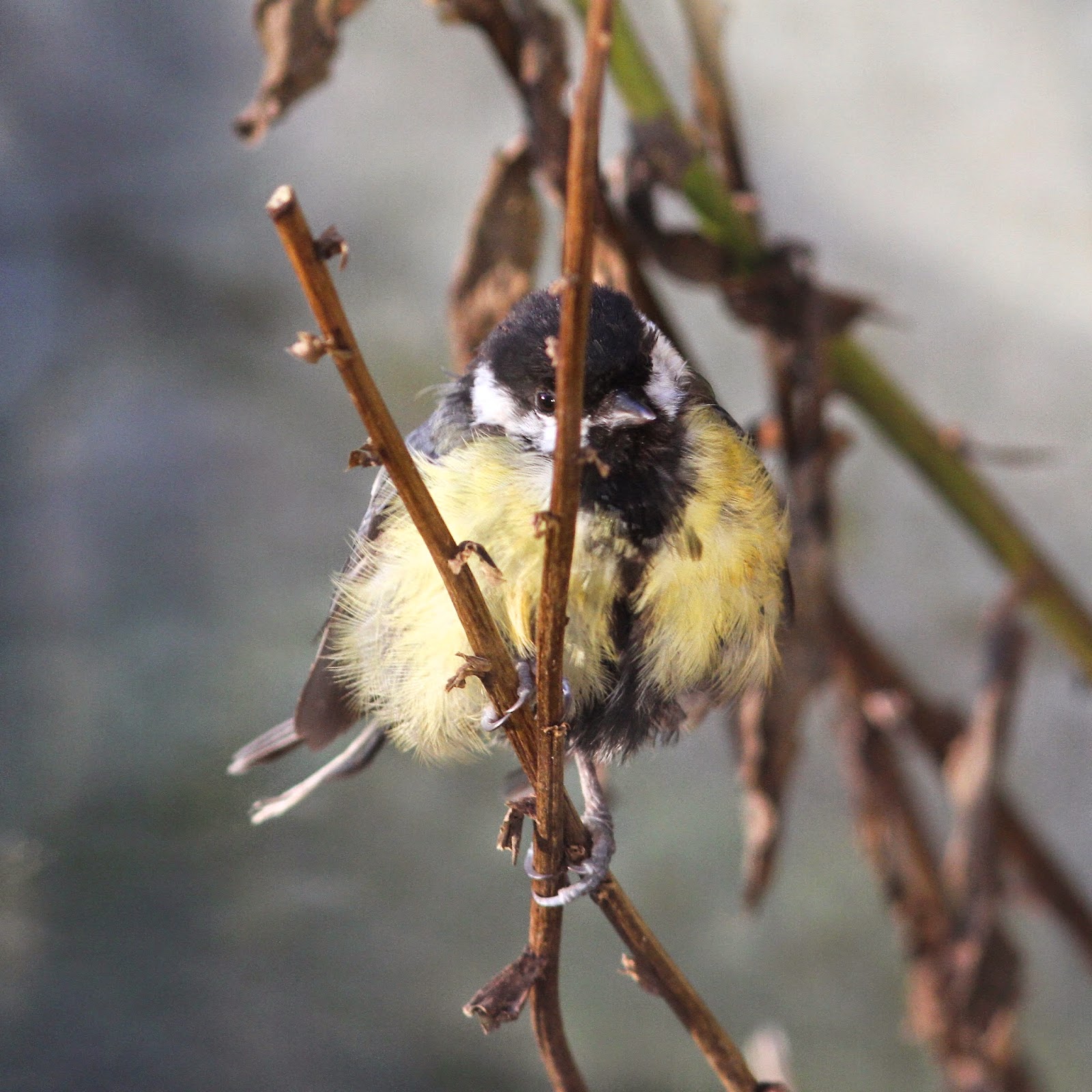
This shabby looking great tit is still around in the garden. These photos were taken through the window yesterday, 32 days after my previous post. Although it looks like Worzel Gummidge it seems well and flies, preens and feeds like any other bird. I don't think the feathers look any worse than a month ago. Maybe it will survive although it might not attract a mate looking like that.
Tuesday, 3 February 2015
It's getting otter and otter
Mother and cub on the ice at Big Waters this morning. It was interesting that the ducks didn't even look up. They must be standing on thinner ice and they know that the otters can't reach them there.
Subscribe to:
Posts (Atom)