My Blog List

Showing posts with label Greylag goose. Show all posts

Friday, 15 May 2026

Birds on trail cameras


Birds account for most of the "non-target" triggers on the trail cameras, mainly pigeons, ducks, geese etc.  The advantage the cameras have is that they are watching all the time, so they see things that would otherwise be missed.  The videos can also show us natural behaviour in an undisturbed environment, something else rarely seen.


Bitterns have been causing great excitement in Gosforth Nature Reserve this spring with at least one booming male and at least one female.  Hopes are high that they may breed in the reserve for the first time.  Most of the time they are hidden in the reeds but this one, probably a female, went for a wander in front of the cameras last week.


And then it happened again a couple of days ago.  The bittern walked past three cameras and was a bit too close by the end.  It appeared to pause when it heard a sudden burst of song from a Cetti's warbler close by in the reeds.  I was interested to see that it stood tall and still when out in the open, just as it does for concealment when it is in the reeds.


Another recent recording showed an adult male Redstart, a summer visitor to the UK and a rare record for the reserve.  This one was presumably en route to a breeding territory farther north in upland woodlands.


And this is what I am seeing most of the time.  There are several Mallard, Canada Goose and Greylag 
Goose families in the reserve and they spend a lot of time using up camera memory and battery power.  This is a brief excerpt from a prolonged visit from the greylags.

Friday, 27 March 2026

Birds on OtterCam


I rarely set my trail cameras for pictures of birds but birds trigger more recordings than mammals.  Most of the mammals are rats and mice and most of the birds are wood pigeons and moorhens but sometimes it is something more interesting.  Several Eurasian bitterns have been in Gosforth Nature Reserve all winter and at least one is still there - it is rarely seen but constantly heard as its booming call echoes through the reeds.  This one did me the honour of walking past my camera.


Another surprise was a cormorant, a common sight on the lake but not previously within range of a trail camera.


Next two little brown jobs.  
Reed buntings are common enough and the singing males are very visible in spring.  Females are less showy but still very attractive and, like the bittern, beautifully camouflaged for life in the reeds.  Cetti's warblers are easily heard but rarely seen, which is a pity as they are also very attractive little birds.


Common birds tend to get overlooked but the trail cameras can give us an intimate view.  Here are a few recent ones that caught my eye.


Finally another surprise - a tawny owl trying to catch a rat.  Perhaps a bit optimistic but it may have misjudged the size of its prey in the dark.  The rat lived to tell the tale.

Tuesday, 25 April 2017

Sextuplets


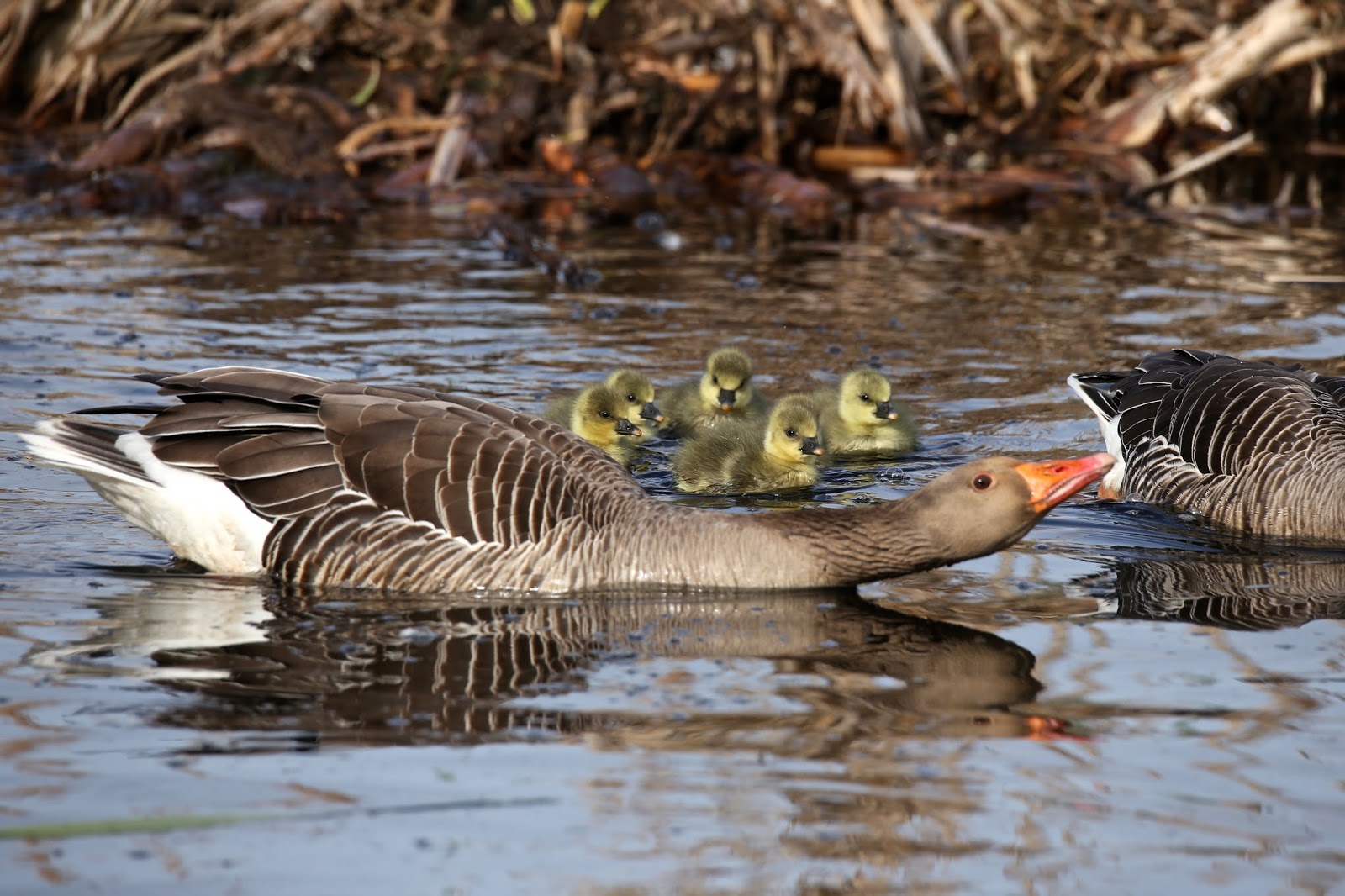
These six little balls of fluff are the first goslings of the season at Gosforth Park and they attracted a lot of interest from the other dozen or so greylags on the lake.


When I was watching the parents spent most of their time warding off the unwanted attentions of the other geese.  This is the father in his threat posture.


Eventually the parents decided to move off to the reedbeds for a bit of peace and quiet.


But they were followed by a flotilla of excited geese.

The last I saw of them they were heading for the other end of the lake.

Friday, 13 May 2016

Water skiing

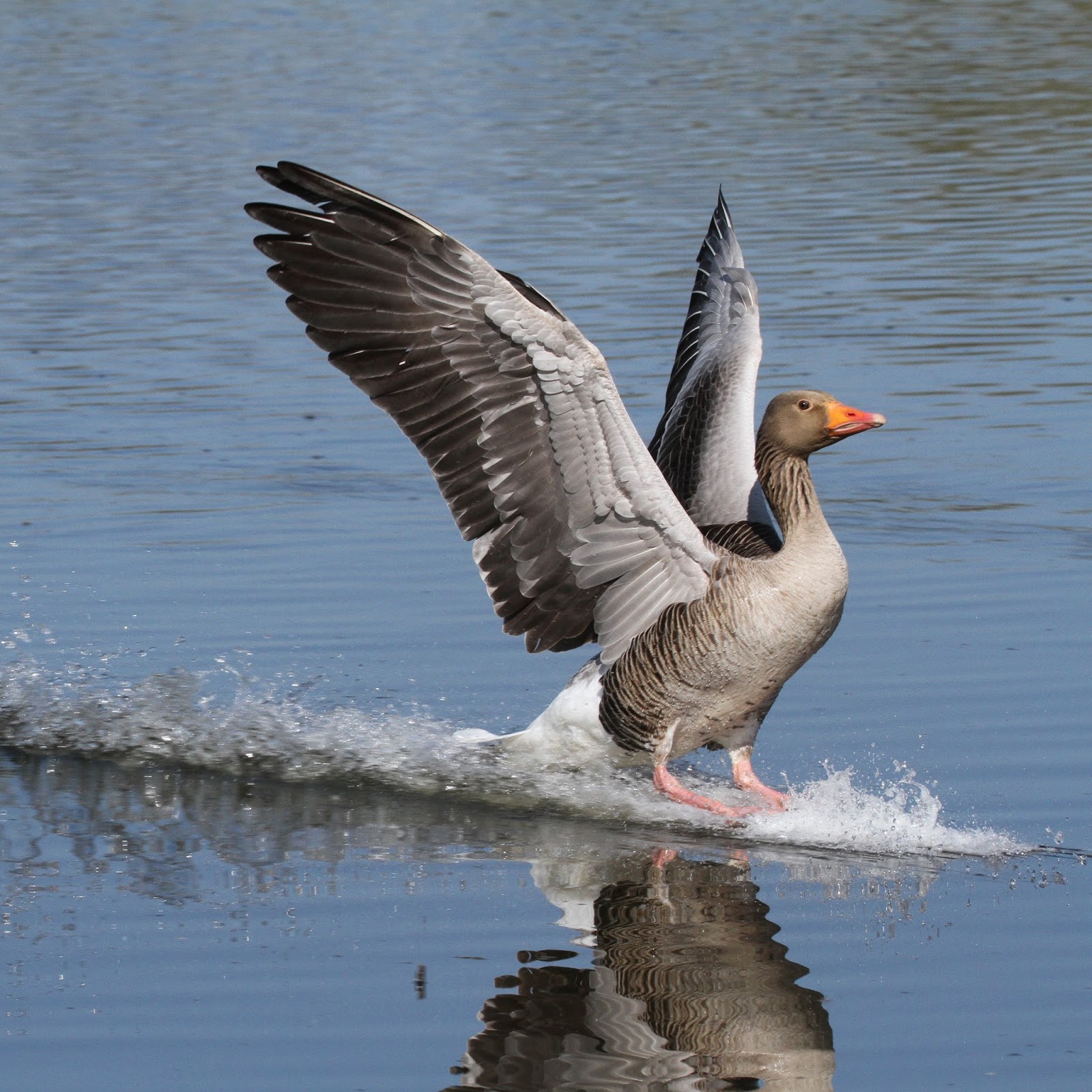
These two birds got bored with swimming around and have taken up water skiing.

Saturday, 7 May 2016

Bird of the week - Greylag goose

The greylag goose (Anser anser) is the only native breeding goose in the UK.  It is a large bird and is the ancestor of domesticated farmyard geese.


The sexes are said to look alike but the birds do vary in colouring.  These two have different coloured beaks and lines around their eyes.


This bird has been sitting on eggs for the last month or so but the eggs eventually hatched this week.


The father has joined in the responsibility of keeping the goslings safe.  There is always an outlier but eventually he fell into line.


The recent history of the greylag is a success story.  In Thomas Bewick's time the Grey Lag Goose was common.

He wrote "This species is common in this country, and although large flocks of them, well known to the curious, ... are seen regularly migrating southward in the autumn, and northward in the spring, yet several of them are known to remain and breed in the fens of Lincolnshire and Cambridgeshire, and, it is said, in various other parts of Great Britain.".


Almost 100 years go there was a small breeding population confined to the north west of Scotland, boosted in the winter by visitors from Iceland.  Between 1930 and 1970 hand-reared birds were released in many parts of Britain, mainly by wildfowlers, and flocks spread across most of the country.  Since then numbers have continued to increase. Native British birds, Icelandic visitors and reintroduced (feral) birds are indistinguishable in the field.


The maps from the BTO Bird Atlas show the increase in the breeding range over the last 40 years.


There has also been a large increase in the winter population.

You can watch a BTO video on identification of grey geese here.  Listen to Sir David Attenborough's BBC Radio 4 Tweet of the Day on greylag goose here.