My Blog List

Friday, 22 October 2021

Ladybird, ladybird, fly away home


The weather here has been odd in October, down to 1℃ on one night recently but up to 20
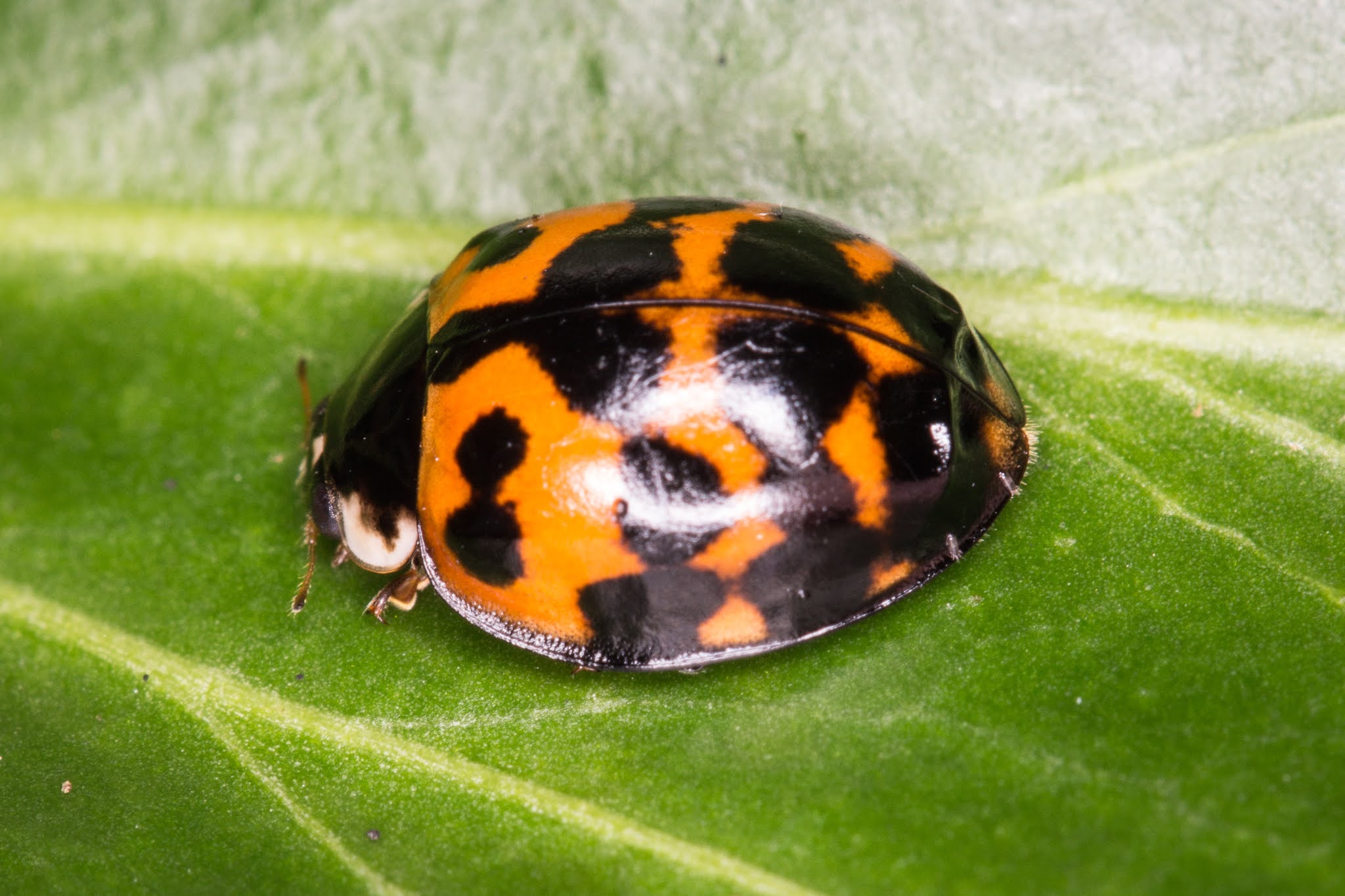
℃ on a few days.  One one warm day last week there was a cloud of ladybirds on the south-facing wall of the warden's lodge at the nature reserve. They were all harlequin ladybirds (Harmonia axyridis) and my friend Phil J counted them - 670 - although I think he may have missed one!  We saw several different colour forms.


When I got home I found about 50 on the wall of my house.


Then this week I found them on the ivy in the copse at the north end of the garden.


Alongside the adults I found several fifth stage instars (larvae),


and pupae.


One of the reasons Harmonia axyridis is so successful is that it can breed so late in the season.  The larvae have to pupate and the pupae emerge as adults before hibernating this winter.  Breeding is long since finished for the native species.

Harmonia axyridis is a non-native invasive species that was introduced from Asia to Europe to control aphids and has since spread to the UK.  It arrived in 2003 and spread rapidly across the country, reaching the North East in 2010.  It and its larvae eat aphids but will eat all sorts of other insect larvae as well, including those of our native ladybirds. Large aggregations form on warm days at this time of year, looking for a place to hibernate.  

Harlequin ladybirds come in many colour forms, even though they are all the same species.  The three commonest forms are f. succinea, yellow, orange or red with 0-21 black spots,

f. spectablilis, black with four orange or red markings,

and f. conspicua, black with two orange or red markings.


Here are some of the other variants in an image from Wikipedia © entomart.


Ladybird, ladybird, fly away home

Your house is on fire, your children are gone,

All except one and her name is Ann,

And she hid under the frying pan.


The meaning of this nursery rhyme is unknown.  For discussion of the possibilities see Wikipedia.

Sunday, 17 October 2021

Fox News


The foxes still visit the garden every night.  The photo below shows four, the alpha vixen at the back and three cubs of varying size but recently I have only seen two or three foxes together.

A few weeks ago the food was all gone within an hour.  Now there is sometimes food left when I go to bed, although it is all eaten before dawn.  They still manage to eat one litre of peanuts every night - that is 600g, or about 1000 peanuts, so shared between six or seven foxes they each eat around 150 peanuts.

I am very intrigued by the persisting difference in size between this year's cubs, even though they should all be full grown by now.  I also think there were more cubs than the five which is the highest number I have managed in one photo this year.  There are probably three small cubs and at least three large cubs and perhaps some in between size. I am fairly sure that the alpha female and her daughter from last year were both feeding young in the spring so I wonder if the small and large cubs come from different litters within the same large family.  Robert Fuller recently posted on his blog the story of a fox family in York with two (presumably related) breeding females with ten cubs between them.  He had the advantage that the cubs were in the garden so he could count them.  My cubs have to be big enough to travel from wherever their den is and jump into the garden so I don't see them until they are older and never see them all together.

These photos show a small and a large cub so you can see how striking the difference is.


Here are two small and one large

And two large and one small.

Although male cubs are larger the size difference here isn't related to sex as at least two of the small ones are male.  Here is a short video of one of the large cubs with two of the small ones.


Marc Baldwin says in his blog that although in most circumstances only a single vixen within a social group will produce cubs, two related vixens may both produce cubs and subsequently "pool" their litters.  The alpha vixen and both her daughters from last year still visit the garden regularly, probably every night.

I have seen less of the dog but he is still around (that's his photo at the top of this post).  On one occasion recently a cub was pushing its luck and had to be reminded who is boss.


I don't think I'll see large family groups any more this year but I'll keep an eye out to see who's about and what they are up to.

Wednesday, 13 October 2021

Dragons on a feather bed


It has been a marvellous Indian summer for dragonflies at my local nature reserve (I'll write a review soon).  The warm weather continues but I think the season will be over within a week or two.  Last week I found four male black darters at Gosforth Nature Reserve.  There seem to be no females
 so they spend most of their time sitting around in the sun.  (I think these were dispersing from breeding waters not too far away in the hope of finding new territory.)  There were lots of male common darters as well and they were also resting in between chasing each other and females. Another animal spends quite a lot of its time sitting around and made a very comfortable resting place.


The swan seemed irritated by the dragonflies and kept waking up and shaking or chasing them off.  Once it caught a common darter on its back but it was so quick I couldn't see whether it ate it or just got rid of it.

This one had the sense to keep out of range.

As did this black darter.

Common darters are common so I expect the swans will have to get used to them.  I hope there will be more black darters in future seasons as well.

Friday, 8 October 2021

Sparrowhawk news


The new sparrowhawk is behaving a bit differently from previous birds although it is early in the winter season.  He is in the garden regularly but mostly hunts in front of the kitchen window.  He rarely sits on the "sparrowhawk" perch in the vegetable garden - when he does sit in ambush he prefers to be under the blackcurrant bush in a more sheltered position.  This is a bit of a nuisance as it makes it hard to take photos and hard to check whether he is there before I go out.  To start with he was sitting on a pile of plant pots and cloche frames.  I can only just see this from the window and the very oblique shot through the double glazing makes for a very blurry picture.

So I tidied it up a bit and put in a more photogenic perch for him.  He does use it but it still isn't very easy to see from the window.


He also retreats right under the blackcurrant, either to eat a kill or just to rest when he isn't hungry.  One afternoon recently he was under there for five hours!


To get a better view I put in a couple of trail cameras to keep an eye on him.


If he makes a kill outside the kitchen he takes it off into the wood to eat to avoid being bothered by magpies that try to steal it from him.  If he is in the vegetable garden he is sometimes spotted by the magpies which don't approve of him and harass him.

I did see the sparrowhawk on the perch recently but he was hungry and only stayed a moment.  

The next day, after another unsuccessful strike, he was on top of the feeder, almost too close for the camera.


Comparing the photos above and in my previous post shows how the tail feathers are re-growing  after moulting. These images are from 24/08, 19/09 and 04/10.  He has smartened up a lot as well.

Sunday, 3 October 2021

News from OtterCam


A lot has been happening on OtterCam since I last posted an update in July.  Then the cameras had seen a cub on its own, although subsequently they did see mother again with two cubs.  Since then, however, there has been only one.  

There was a strange episode in mid August where an unaccompanied cub came through the culvert and returned a minute later, calling for its mother.  Twenty minutes later it (or another one) went through again in the same direction. No other otter was recorded on that night.  The mother and only one cub had been seen together on OtterCam the night before and one and two nights after this episode.  The cubs were then only about seven months old, so too small and too young to be independent - normally at this age they stick very close to their mother.  I presume one cub is dead but whether it got lost or was abandoned or got sick is not possible to say.

Shortly afterwards the otters were showing a problem with their fur.  It had a strange patchy distribution - affecting the body but not the head, limbs or tail - and didn't seem to affect the underlying tissues.  I was worried they might have some infection, dietary deficiency, poisoning or injury (which might have been involved in the disappearance of the other cub) but I don't think that was the case and the problem has subsequently resolved.  This is how the mother looked.

And the cub.


Here they are on video, from both cameras.

The solo otter, which I presume to be the dog, was also affected and on one occasion looked very weary or in pain - normally it runs through the culvert full of energy.  It has also subsequently recovered.  My best guess is that the otters had something on their fur, perhaps oil or something like that, which eventually wore off or was groomed off.

I wrote last time that I had seen the otter fishing in the culvert for the first time.  It has happened again although whatever this one is eating must be very small, not even a mouthful.

Normally the otters take no notice of the cameras which are present every time they go through the culvert.  A few nights ago an otter was coming through towards the first camera but reacted when the infrared lights of the second camera switched on.  It retreated, as if it hadn't seen them before.  Eight minutes later it plucked up the courage to run past.  Then early yesterday morning perhaps the same animal again reacted to the cameras while heading north.  This makes me wonder if this is a new otter which isn't familiar with the territory.

Finally, last week there were two lovely episodes with mother and cub which I hope you will enjoy.  Watch with the sound on.